Seoul InterCHARM Korea 2027
7–9 July 2027 · COEX Convention & Exhibition Center · Seoul, South Korea
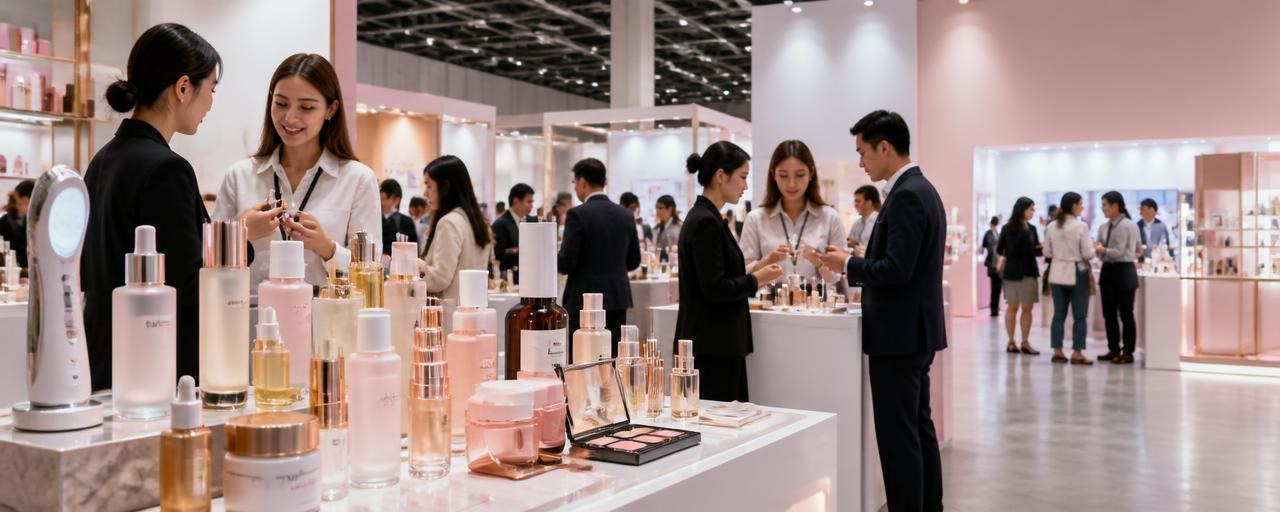
Seoul InterCHARM Korea is a business-to-business beauty trade fair covering cosmetics, perfumery and personal care, alongside manufacturing, salon, aesthetics, device, ingredient and packaging segments. The official event site presents the 2027 edition as a meeting point for international brands, buyers, distributors and retailers. Use the three days to compare products, evaluate supplier fit, explore production and packaging options, and identify conversations worth following up. The site lists Business Matchmaking and an “All About That Beauty” seminar; detailed seminar information is still to come.
Why Seoul InterCHARM Korea matters
See products across the beauty supply chain
The event spans finished beauty products as well as ingredients, OEM/ODM manufacturing, personal-care devices and packaging. That range can help buyers connect a product idea with the formulation, production or presentation questions behind it.
Compare before committing
Seeing products and suppliers in one setting can support a structured comparison of range, format, packaging, target channel and production capability. Treat conversations as an early assessment: confirm specifications, compliance, capacity and commercial terms directly before making a decision.
Make professional connections with a purpose
The event is positioned for brands seeking buyers, distributors and retailers. Its 2027 site also lists Business Matchmaking. Use these opportunities to set a clear objective for each conversation rather than assuming that attendance alone will produce a partnership.
- 2026 key figures: 550+ exhibitors, 58,000+ unique visitors and participants from 50+ countries, as stated on the event website.
- 2027 expected scale: the event’s About page lists 500 exhibitors and 800 stands as expected figures.
The 2026 figures describe the reported previous edition; the 2027 scale is explicitly expected, not a final result.
Who should visit Seoul InterCHARM Korea?
Retail buyers, importers and distributors
Useful if you are assessing brands and products for a retail, wholesale or distribution portfolio. Focus on range fit, target customer, product differentiation and the supplier’s ability to support your market.
- Shortlist products by category and target channel.
- Compare packaging, sizes and range breadth across suppliers.
- Ask about export experience, lead times, minimum order quantities and product documentation.
- Record what requires a second discussion or formal quotation.
The event description identifies buyers, distributors and retailers as audiences that international brands seek to reach.
Beauty brand owners and product developers
Useful if you are developing a new line, extending a range or evaluating external production. Look beyond finished products to ingredients, OEM/ODM options, devices and packaging.
- Bring a concise product brief, intended customer and target market.
- Compare supplier capabilities against your formula, format, quality and launch requirements.
- Ask how customisation, testing, packaging and production schedules are handled.
- Separate initial capability discussions from verified commercial commitments.
Salon, clinic, hair and nail professionals
Useful if you are reviewing products or equipment for professional services. Prioritise suitability for your service menu, ease of use, training needs, replenishment and after-sales support.
- Identify products and devices relevant to the services you provide.
- Ask for professional-use instructions, documentation and support arrangements.
- Compare consumables and replenishment requirements before shortlisting suppliers.
The event’s visitor page describes beauty professionals and mentions salons and clinics among organisations that can connect with brands.
Manufacturers and sourcing teams
Useful if you need ingredients, packaging, labelling or contract-manufacturing partners. Bring technical requirements and a realistic project stage so suppliers can respond to a defined brief.
- Compare capabilities relevant to your product category and production scale.
- Ask about compatible formats, materials, documentation and development stages.
- Identify what your technical, quality or regulatory teams must review afterwards.
What can you find at Seoul InterCHARM Korea?
Perfumery, cosmetics and personal care
Explore skincare, colour cosmetics, fragrances and other personal-care products. Compare product formats, range structure, packaging and positioning against your channel or development brief.
Ingredients and formulation
The event’s special sections include FormulAction for raw materials and ingredients. Ingredient suppliers may be relevant to product developers and manufacturers comparing formulation options. Ask for the precise ingredient identity, supporting documents and suitability for your intended product and market.
OEM/ODM and personal-care devices
The official exhibit-items page identifies OEM/ODM manufacturing and personal-care devices. For contract production, clarify whether a supplier’s capabilities match your formula, volume, packaging and quality requirements. For devices, review intended use, operating requirements and documentation rather than relying on a short demonstration.
Hair, nail, aesthetics and spa
Hair and nail salon products, aesthetic and spa categories broaden the event beyond retail cosmetics. Professionals can focus on tools, consumables and products relevant to their service environment, then assess training, support and ongoing supply requirements.
Packaging, labelling and home care
InterCHARMpack is listed for packaging and labelling; InterCHARMhome covers home care. These areas are relevant to teams evaluating product presentation, container formats and beauty products intended for home use. Check material specifications, compatibility, decoration options and labelling needs with each supplier.
Named special sections
- Green Valley: natural and organic cosmetics.
- Barber Zone: barber products.
- InterCHARM-Visage: colour cosmetics.
- FormulAction: raw materials and ingredients.
- Beauty Device: home-care gadgets.
- InterCHARMpack: packaging and labelling.
- InterCHARMhome: home care.
- InterCHARMaroma: convenience products.
Use these labels as starting points for planning; confirm the final 2027 floor plan and exhibitor listings when released.
What makes Seoul InterCHARM Korea distinctive?
Its range connects brands and finished products with the capabilities used to create and present them.
Alongside cosmetics and perfumery, the official exhibit-items page lists OEM/ODM, personal-care devices, salon products, aesthetics and spa. Special sections add ingredient, home-care and packaging themes. This breadth may help a buyer review finished ranges while product-development colleagues investigate formulation, manufacturing or packaging questions.
The event website reports 2026 participation from 50+ countries, with 550+ exhibitors and 58,000+ unique visitors. Those figures do not establish that any particular supplier, buyer or product will be present in 2027. Check the current directory and floor plan before setting a target list.
What should you try to achieve at Seoul InterCHARM Korea?
For buyers and distributors
Build a shortlist of suppliers that meet a defined category and channel brief. Record the product range, intended customer, order requirements and evidence still needed.
For brand and product teams
Identify production, ingredient or packaging capabilities that could support a specific product concept. Compare suppliers against the same formulation, quality, volume and timing requirements.
For salon and clinic professionals
Evaluate products or devices for service relevance and operating practicality. Ask about professional-use guidance, training, replenishment and support, then review the options with the people who will use or purchase them.
For exhibitors
Define the conversations that would make participation worthwhile. Identify target buyer types, products to demonstrate and questions needed to assess a prospect’s channel and requirements. The event provides a business setting, not a guarantee of leads or sales.
How to prepare before Seoul InterCHARM Korea
1. Set a focused objective
Choose one primary outcome: source a category, compare contract-manufacturing options, assess packaging suppliers, review a professional device or understand a product segment. Translate it into a decision you can make after the event.
2. Build a category-based target list
The event website provides an exhibitor directory and product categories. When the 2027 directory and floor plan are current, shortlist companies by category and note why each is relevant. Do not assume a past exhibitor or directory entry will return for the next edition.
3. Prioritise conversations
Group prospects into A — essential to the brief, B — relevant alternatives, and C — explore if time allows. The 2027 site lists Business Matchmaking; confirm how it works and whether appointment booking is available before relying on it.
4. Prepare beauty-industry questions
- Which product formats and categories can you supply or manufacture?
- What ingredients, formula options or customisation are available?
- What are the minimum order quantities, sample process and indicative lead times?
- Which packaging materials, sizes, finishes and labelling services can you support?
- What quality, safety, efficacy or product documentation can you provide?
- Which markets do you serve, and what market-specific documentation is available?
- For devices, what are the intended use, operating requirements and after-sales support?
- For salon or clinic products, what training and professional-use guidance is available?
- Which points need confirmation by a technical, quality or regulatory specialist?
5. Prepare a comparison sheet
Use the same fields for every discussion: company, product or capability, relevance, minimum order, lead time, documents requested, open questions and next action. A consistent record makes post-show comparison more useful than a collection of brochures.
6. Check the final practical details
Confirm visitor registration, admission conditions, opening hours, current exhibitor listings and the final programme through the event’s official channels before travelling. Detailed seminar information is still marked as coming soon.
How to make the most of the exhibition
Move from broad discovery to comparable supplier conversations. At each stand, capture:
- Company: who you spoke with and the relevant product or capability.
- Product: category, format and intended use.
- Why relevant: the need it may address.
- Evidence: specifications or documents to request and claims needing independent review.
- Next action: sample, quotation, technical follow-up or no further action.
For skincare, compare formulation format, packaging, order requirements and documentation rather than judging only by presentation. For OEM/ODM, record development stages and the information the supplier needs. For devices, note operating and support requirements alongside product features.
Allow time to revisit priority prospects. Treat demonstrations and verbal statements as a starting point; request written specifications and review them with the appropriate colleagues.
Programme and activities at Seoul InterCHARM Korea
The official 2027 event page lists Business Matchmaking and the “All About That Beauty” seminar. The seminar is marked as coming soon, so topics, speakers and session times should not be assumed. Check the final programme before dividing time between exhibitor visits and scheduled activities.
The event website displays a 2025 awards item and past-edition video highlights. These are historical references, not confirmation that the same awards, exhibitors or activities will be repeated in 2027.
Networking with purpose
Prepare a concise introduction covering your role, product category, target channel and what you are trying to source, sell or develop. Ask a specific question, such as whether a supplier’s minimum production volume fits your project or which packaging formats it can customise.
When 2027 matchmaking details are published, check eligibility, appointment format and booking requirements. Record who agreed to provide information and by when. A contact is useful when you know the next step and can evaluate whether the offer fits your requirements.
One day or several days at Seoul InterCHARM Korea?
The 2027 edition is scheduled across three days. How much time you need depends on how many categories and supplier conversations matter to your objective.
- One day may suit you if you have a narrow brief and a short priority list.
- Two days may suit you if you need to compare suppliers across cosmetics, manufacturing, ingredients or packaging.
- All three days may be useful if you are assessing several categories, combining the fair with programme sessions, or exhibiting and need follow-up time.
Use the final floor plan and programme to refine this decision; do not assume every listed exhibitor or session will occupy the same area or time.
Bring a live product or sourcing project
A concrete project turns a broad visit into a useful evaluation. Bring a short brief with product category, target customer, intended market, format, packaging needs, expected volume and desired timing. Share only information you are comfortable disclosing.
For OEM/ODM, identify whether you need formulation development, manufacturing, filling, packaging or a combination. For ingredients, bring the product function and technical criteria you need to meet. For packaging, specify material, size, closure, decoration and labelling requirements. For salon products or devices, describe the service setting, user needs and support expectations.
Where claims, safety, efficacy or regulatory classification matter, identify questions for your qualified technical or regulatory adviser. A trade-show conversation cannot replace a formal product assessment.
After Seoul InterCHARM Korea: turn conversations into decisions
Within a few days, sort contacts into three groups:
- A — immediate review: suppliers closely matched to the brief and ready for a documented next step.
- B — potential: relevant companies where specifications, samples, pricing or capacity still need checking.
- C — market intelligence: useful category, packaging or formulation observations without an immediate purchasing case.
Follow up with a concise message that identifies the conversation, repeats the product or project requirement and lists the information requested. Depending on the category, ask for specifications, ingredient details, samples, packaging drawings, minimum order quantities, lead times, quality documents or commercial terms.
Compare responses against the same criteria used at the fair. Validate product claims and market-specific requirements independently, document assumptions, and involve technical, procurement and regulatory colleagues before placing an order or entering an agreement.
Who should consider exhibiting at Seoul InterCHARM Korea?
The listed categories point to potential relevance for cosmetics and perfumery brands, skincare and colour-cosmetics manufacturers, OEM/ODM providers, personal-care device companies, hair and nail suppliers, aesthetic and spa businesses, ingredient suppliers and packaging or labelling specialists.
Exhibitors should define the audience they need to reach—retailers, distributors, salon and clinic buyers, brand owners or product-development teams—and prepare a demonstration or product discussion around a clear business question. The site describes an international audience and lists Business Matchmaking for 2027, but does not guarantee particular buyer attendance or commercial outcomes. Confirm stand options, participation terms and programme arrangements with the organiser.
Seoul InterCHARM Korea visitor checklist
Before
- ☐ Set a product, supplier or market objective.
- ☐ Check registration and admission requirements on the official event site.
- ☐ Review the current exhibitor directory, categories, floor plan and programme when available.
- ☐ Prioritise target companies and prepare category-specific questions.
- ☐ Bring a project brief and structured supplier-comparison sheet.
During
- ☐ Record company, product, relevance, evidence needed and next action.
- ☐ Compare products using the same technical and commercial criteria.
- ☐ Attend confirmed programme sessions that support your objective.
- ☐ Revisit priority suppliers and clarify outstanding questions.
After
- ☐ Sort contacts by urgency and fit.
- ☐ Request written specifications, samples or quotations where appropriate.
- ☐ Review claims, documentation and market requirements with qualified colleagues.
- ☐ Record supplier decisions and follow-up owners.
Is Seoul InterCHARM Korea worth visiting?
The fair is most relevant if you work in beauty retail, distribution, product development, contract manufacturing, professional salons or clinics, ingredients, devices or packaging—and have a defined product or sourcing question. Its breadth can help teams compare finished products with related production and presentation capabilities, while the listed matchmaking and seminar programme may add structured opportunities when details are confirmed.
The value depends on preparation. A focused target list, consistent comparison criteria and disciplined follow-up make a three-day event more useful than browsing without a decision in mind. Confirm the final 2027 directory and programme before setting expectations about specific suppliers or sessions.
Seoul InterCHARM Korea 2027 at a glance
| Item | Information |
|---|
| Event | Seoul InterCHARM Korea |
| Dates | 7–9 July 2027 |
| City and country | Seoul, South Korea |
| Venue | COEX Convention & Exhibition Center |
| Organisers | SeoulMESSE Co., Ltd. and RX K Fairs |
| Main industries | Cosmetics, perfumery, personal care, OEM/ODM, devices, salon products, ingredients and packaging |
| Relevant audiences | Buyers, retailers, distributors, beauty brands, product teams, salon and clinic professionals, manufacturers |
| 2026 reported key figures | 550+ exhibitors, 58,000+ unique visitors and 50+ countries |
| 2027 expected scale | 500 exhibitors and 800 stands, listed as expected by the event site |
| 2027 programme | Business Matchmaking listed; seminar details marked coming soon |
Dates and venue are published for 2027; seminar details and the final exhibitor plan should be checked when updated.
Make your Seoul InterCHARM Korea visit count
Before you go, decide which product category or supplier question matters most. During the fair, compare evidence and capabilities rather than relying on first impressions. Afterwards, turn the strongest conversations into documented follow-up and a clear shortlist. Discover. Compare. Evaluate. Follow up.
Cosmetics opportunities in South Korea
Market size and demand
South Korea recorded a cosmetics trade surplus of KRW 8.5631 trillion, reported as USD 6.6 billion, in 2022. The Ministry of Food and Drug Safety said cosmetics exports had exceeded KRW 10 trillion for two consecutive years and that Korea ranked fourth among cosmetics exporters at that time. These are dated 2022 indicators, not a current market-size estimate; they show the country’s export-oriented cosmetics base without establishing demand for any particular product.
Market drivers and commercial opportunities
The same ministry analysis noted that exports to China declined while exports to Southeast Asian markets increased. This is evidence of destination diversification in that period, not proof of current growth or easy market entry.
- Evaluate Korean beauty suppliers for distribution: buyers and distributors may use the fair’s cosmetics, skincare, colour-cosmetics and personal-care ranges to assess product and supplier fit. Validate price, supply, documentation, competition and channel suitability before proceeding.
- Explore manufacturing and product-development partners: brand owners may investigate the listed OEM/ODM, ingredient and packaging categories against a defined product brief. Confirm technical capability, quality systems, minimum volumes, lead times and terms directly.
- Assess entry requirements for functional cosmetics: companies considering products with functional claims need to establish the applicable Korean regulatory pathway before marketing or importing.
Regulations and market-entry conditions
The Korean Ministry of Food and Drug Safety describes a requirement under the Cosmetics Act for a responsible seller intending to manufacture or sell functional cosmetics by manufacturing or importing them to obtain an evaluation or submit a report to MFDS for product safety and effectiveness. The requirements apply to functional cosmetics and may not apply in the same way to every cosmetic product. Companies should verify current rules, product classification and responsible-seller arrangements with MFDS or qualified local advisers before making an entry decision.
What this means for exhibitors
South Korean and international exhibitors may use buyer and distributor conversations to test whether a product range fits a defined channel or export market. Companies offering contract manufacturing, ingredients or packaging may present capabilities against specific briefs, while recognising that dated export figures do not guarantee demand, buyers or orders.
What this means for visitors
Visitors may compare Korean products and suppliers, investigate production or packaging capabilities, and identify regulatory questions to resolve before import or sale. For functional cosmetics, factor the MFDS evaluation or reporting pathway into due diligence rather than treating a trade-show introduction as regulatory clearance.
For further information, please click
here .