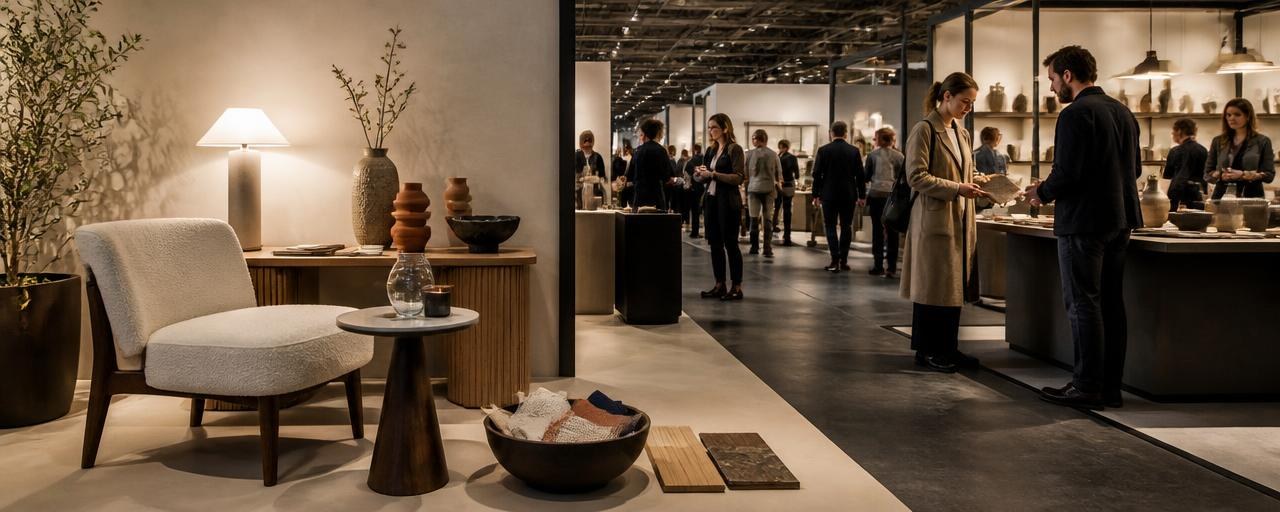
Maison&Objet Paris 2027: design, decoration and lifestyle sourcing
Maison&Objet Paris takes place from 14–18 January 2027 at Paris Nord Villepinte Exhibition Centre, Paris, France. The January edition is the Premier format of the twice-yearly trade fair, bringing together Signature & Projects, Fine Craft, Decor & Design, Fashion & Accessories, Fragrance & Ambiance, Wellness & Beauty, and Gift & Play. It is designed for professionals who want to discover collections, evaluate materials and finishes, compare suppliers and consider how products can serve retail, residential and hospitality projects.
The January programme highlights include the Sensory Shift theme, developed with NellyRodi, and the installation “Tension” by Designer of the Year Paul Cocksedge. A visit is most useful when you connect those creative perspectives to a specific sourcing, specification, product-development or market objective.
Maison&Objet Paris 2027 at a glance
| Item | Information |
|---|
| Event | Maison&Objet Paris, January Premier edition |
| Event type | International business trade fair |
| Category | Household, Furniture & Interior Design |
| Dates | 14–18 January 2027 |
| Opening hours | Thursday–Sunday, 09:30–18:30; Monday, 09:30–18:00 |
| Venue | Paris Nord Villepinte Exhibition Centre, Paris, France |
| Organiser | SAFI – Maison&Objet |
| Main sectors | Signature & Projects; Fine Craft; Decor & Design; Fashion & Accessories; Fragrance & Ambiance; Wellness & Beauty; Gift & Play |
| Core audiences | Retail buyers, interior designers and architects, specifiers, hospitality professionals, design brands and artisans |
| Published visitor research | The organiser’s 2022 visitor satisfaction survey reported that 92% of respondents were looking for new suppliers. |
The January 2027 dates, venue, hours and named programme highlights are published. The organiser’s general website also displays brand and country counts without tying them to a specific edition, so they are not used here as current attendance figures.
Why Maison&Objet Paris matters to design professionals
Discover products across connected categories
The fair combines design, decoration, craft and lifestyle ranges rather than focusing on one product type. Retailers can compare collections across adjacent categories, while specifiers can move from a design idea to the materials, finishes, lighting and objects that may support a project.
Evaluate materials and workmanship
Furniture, bespoke pieces, crafted objects and eco-designed materials give designers and buyers practical details to inspect. Ask about dimensions, construction, finishes, material composition, care, customisation, minimum orders and lead times before treating a product as suitable for a project or retail range.
Use the theme as a design lens
The January 2027 theme, Sensory Shift, frames design around reconnecting with materials, gestures and sensory experience. The announced “Tension” installation by Paul Cocksedge and dedicated presentations such as Smart Interior and Eco-materials Corner provide points of reference for exploring how these ideas appear in products and spaces.
Understand what buyers seek
The organiser’s 2022 visitor satisfaction survey reported that 92% of respondents were looking for new suppliers; the same survey information says half placed orders during the fair and 67% concluded a deal within six months. These are organiser-reported survey results, not a promise of outcomes for any participant. They underline why exhibitors should arrive with clear product information and why buyers should record follow-up actions while comparing alternatives.
Exhibition sectors and product groups at Maison&Objet Paris
Signature & Projects
This January division is aimed at high-end interior design, architects, interior designers and specifiers working on premium residential and hospitality projects.
- Furniture and bespoke pieces
- Decorative and architectural lighting
- Interior materials and finishes
- Craftsmanship and made-to-measure solutions
- Interior design concepts for residential and hospitality spaces
Fine Craft – métiers d’art
Fine Craft places skilled making and distinctive objects at the centre of the design offer.
- Handcrafted decorative objects
- Ceramic and glass pieces
- Artisan-made furniture and accessories
- Objects shaped by specialist materials and techniques
- Singular pieces for interiors and collections
Decor & Design
Decor & Design connects home decoration with the objects, surfaces and finishing choices that define a room or collection.
- Decorative objects and accessories
- Furniture for living spaces
- Textiles and soft furnishings
- Surface finishes and material details
- Lighting and decorative accents
Fragrance & Ambiance
This sector serves brands and buyers interested in products that shape atmosphere and the sensory experience of a space.
- Home fragrance
- Diffusers and scent accessories
- Candles and ambient products
- Decorative vessels and presentation
- Products for gifting and lifestyle retail
Fashion & Accessories
Fashion & Accessories broadens the fair’s lifestyle offer for retailers sourcing complementary ranges.
- Fashion accessories
- Bags and small personal accessories
- Jewellery and adornment
- Leather and crafted accessories
- Design-led lifestyle pieces
Wellness & Beauty
Wellness & Beauty brings personal-care and wellbeing products into the wider home and lifestyle sourcing mix.
- Beauty and personal-care products
- Wellness accessories
- Products for home wellbeing
- Presentation and gifting formats
- Design-led lifestyle products
Gift & Play
Gift & Play includes giftable and playful products; the January programme identifies Pet Square within this sector.
- Gifts and design-led souvenirs
- Toys and playful products
- Children’s and family lifestyle items
- Pet accessories presented in Pet Square
- Small decorative products suited to retail ranges
Who should visit Maison&Objet Paris?
Retail buyers, concept stores and distributors
Useful if you are reviewing a collection, seeking new suppliers or looking for products that complement an existing retail offer.
- Compare furniture, decorative objects and lifestyle accessories across sectors.
- Assess design, finish, packaging and the fit with your customer profile.
- Ask about wholesale terms, minimum orders, production capacity and delivery lead times.
- Identify products that can sit together in a coherent collection or seasonal presentation.
Keep a written comparison of product, supplier, price basis, terms and next action; the survey evidence on supplier-seeking visitors makes purposeful evaluation more useful than collecting catalogues without prioritisation.
Interior architects, designers and specifiers
Useful if you are sourcing products or materials for a live brief, building a reference library or comparing solutions for a residential or hospitality project.
- Inspect material samples, finishes, proportions and construction details.
- Ask which options can be customised and what information is needed for a specification.
- Compare project suitability, care requirements, availability and delivery times.
- Use the January Signature & Projects presentations and Smart Interior focus to explore high-end residential and hospitality design.
Bring the project type, approximate dimensions, functional requirements and decision timetable so conversations can stay specific.
Hospitality and premium residential professionals
Useful if you shape guest environments or premium living spaces and need to connect atmosphere with durable, usable design choices.
- Review furnishings, lighting, materials and decorative details as a coordinated environment.
- Consider how products support a guest experience, operational use or the intended mood.
- Ask about durability, maintenance, replacement and project quantities.
- Compare bespoke solutions with products that can be sourced repeatedly.
Design brands, makers and artisans
Useful if you are considering a trade-fair presence, launching a collection or developing distribution relationships.
- Compare the audience and sector fit of each division before selecting a stand location.
- Prepare clear product stories, specifications, materials, order terms and production capacity.
- Identify the retailers, specifiers and project professionals most relevant to your range.
- Plan how to capture and qualify conversations for follow-up.
Roles that can benefit
Relevant roles include purchasing managers, buyers, category managers, importers, distributors, interior architects, interior designers, decorators, project specifiers, hospitality designers, product developers, creative directors, brand owners and craft makers.
Why visit Maison&Objet Paris?
- Build a focused supplier shortlist: compare brands across decoration, furniture, craft and lifestyle categories against a defined buying brief.
- Evaluate project materials: inspect finishes, construction and samples before specifying products for residential or hospitality interiors.
- Broaden a retail collection: assess adjacent gift, fragrance, fashion-accessory and wellness ranges alongside home products.
- Explore design directions: use Sensory Shift and the announced installation and curated showcases as prompts for evaluating materials, sensory details and emerging concepts.
- Check supplier fit: discuss customisation, availability, minimum order, delivery and after-sales arrangements with the relevant brands.
- Turn inspiration into decisions: record what to request, who owns the follow-up and when a product needs to be evaluated by your team.
Why exhibit at Maison&Objet Paris?
Maison&Objet is relevant to design and lifestyle brands, manufacturers, artisans and makers whose products align with the fair’s seven January sectors. The official exhibitor information describes a visitor mix that includes retailers, specifiers, designers and influencers, and presents the fair as a platform for reaching the decoration and lifestyle community. Treat those broad audience claims as organiser positioning and validate the fit for your own product category and commercial goals.
Before committing, define which buyers or specifiers you need to reach, what makes your range distinctive, what samples and technical information they will need, and how you will qualify each conversation. The organiser describes exhibitor tools including a communications kit, product pages on MOM and badge-scanning functionality for contact follow-up; confirm availability and terms for the January edition directly with the organiser.
- Choose the sector that best matches your product and target buyer.
- Present new collections with clear dimensions, materials, finish options and order terms.
- Prepare a concise explanation of the product’s design value and intended application.
- Set meetings and follow-up priorities around realistic distribution or project goals.
- Review current French and EU import, product-safety, labelling and sustainability obligations for your product before making market-entry commitments.
For cross-border participation, do not assume that a fair appearance alone resolves distribution, compliance, logistics or after-sales questions. Confirm those details for each product and route to market.
What makes Maison&Objet Paris different?
It places several design and lifestyle categories in one professional sourcing environment while giving the January edition a distinct project-design and craft emphasis.
The January programme identifies Signature & Projects for high-end residential and hospitality interiors, alongside Fine Craft, Decor & Design, Fashion & Accessories, Fragrance & Ambiance, Wellness & Beauty, and Gift & Play. Smart Interior focuses on design, wellbeing and contemporary living in premium residential and hospitality contexts. Eco-materials Corner presents an international selection of eco-designed materials and finishes, while Pet Square sits within Gift & Play. The Sensory Shift theme and Paul Cocksedge’s “Tension” installation add a creative perspective to the product-led fair.
This breadth can help buyers compare complementary ranges and help project professionals see how products, materials and atmosphere relate. It also means you should prioritise the relevant sectors rather than assume every hall serves the same brief.
What should you try to achieve?
“See what is new” is too broad to guide a useful visit. Choose an outcome you can evaluate afterwards.
If you are a retail buyer
Identify a shortlist of suppliers in two or three categories that can fill a specific gap in your range.
If you are an interior designer or specifier
Find and compare products or materials that meet the design, performance and delivery requirements of one live project.
If you are a hospitality professional
Build a set of product options for one area of a guest environment and record the maintenance and availability questions that remain.
If you are exhibiting
Define the types of retailers, distributors or specifiers you want to meet and the information needed to qualify a potential follow-up.
A productive visit ends with decisions, documented questions and named next steps, not only photographs and brochures.
How to prepare before Maison&Objet Paris
1. Define your purpose
Write down whether you are sourcing for retail, specifying for a project, exploring a category or presenting a collection. Turn that purpose into three to five questions. For furniture and interiors, useful questions include: what dimensions and finishes are available, can components be customised, what is the minimum order, how are items packed and delivered, and what care or compliance information is supplied?
2. Select sectors before you arrive
Use the official fair plan and January sector descriptions to identify the divisions that match your brief. Include adjacent categories only where they support a clear retail or project objective. The organiser’s website provides the current visitor information and badge route; check it for the latest access and registration details before travel.
3. Build a target list
List brands or product types you want to evaluate. If you are sourcing, separate direct alternatives from complementary products. If you are specifying, note required dimensions, performance, material and delivery criteria. Use the official exhibitor directory if available for your edition, and confirm that listings correspond to the January show.
4. Rank conversations
- A – Must meet: suppliers or brands directly tied to a buying decision or live project.
- B – Useful to meet: complementary suppliers, alternative materials or potential distribution partners.
- C – Explore if time allows: ideas outside the brief that may inform future ranges or concepts.
5. Prepare product-specific questions
- What materials, finishes and dimensions are standard, and what can be customised?
- What is the minimum order quantity and how does it vary by finish or product?
- What are the production and delivery lead times for a first order and repeat orders?
- How should the product be installed, maintained, cleaned or repaired?
- What technical sheets, material declarations or product-safety documents are available?
- How are samples supplied, and are sample costs credited against a later order?
- What packaging protects the product and supports transport or retail presentation?
- For project work, can the supplier meet the required quantities and delivery schedule?
- What are the payment, warranty, replacement and after-sales arrangements?
For a planned visit or stand, ilikevents can help with participation planning, registration assistance and travel arrangements.
How to make the most of the exhibition
Do not collect everything. Compare each product against your brief and capture the information needed to make a decision. A useful note format is:
Company → Product → Why relevant → Evidence to request → Contact → Next action.
For example: record a chair’s material, dimensions and finish; note whether it suits the project or retail customer; request the technical sheet and lead time; identify the person responsible for the quote; and set a date for follow-up. For decorative materials, photograph or label samples with the brand and finish name so they do not become untraceable after the fair.
Use the organiser’s official floor plan to navigate between the divisions you selected. The January programme includes curated presentations and installations; check the published schedule before assigning time to a session or showcase. Leave space in the day to revisit shortlisted suppliers and confirm details.
Plan your time realistically
The fair runs for five days across seven sectors, so the right visit length depends on your number of target suppliers, project complexity and interest in the programme.
One day
Best suited to a focused brief with a short target list. Prioritise must-meet brands and one or two relevant sectors, then leave time to record comparisons.
Two days
Useful when you need to compare several product groups, inspect samples and revisit suppliers. Use one day for core sourcing and another for project details or complementary categories.
Three or more days
Consider a longer visit if you are evaluating a broad collection, combining buyer meetings with programme highlights, or exhibiting and need time for setup, conversations and follow-up. Confirm the current opening schedule and access arrangements before planning.
Beyond the exhibition floor
For January 2027, the official programme highlights the Sensory Shift theme, created with NellyRodi, and the “Tension” installation by Designer of the Year Paul Cocksedge. The fair also presents Smart Interior for premium residential and hospitality contexts, Curatio, Manufactures d’Excellence, Eco-materials Corner, Pet Square and “What’s New?” design and hospitality showcases. These are announced edition highlights; use the programme published for your visit to confirm locations and timings.
Approach the showcases with a question: what material, use, sensory detail or spatial idea could influence your next product, specification or customer experience? Capture the relevant detail and connect it to a product or supplier conversation rather than treating inspiration as a decision by itself.
Networking at Maison&Objet Paris
Prepare a short introduction that explains your role, the products or projects you are focused on and the kind of information or partner you are seeking. For buyers, be ready to describe the customer, price positioning, quantities and delivery window. For designers and specifiers, explain the project type, key constraints and decision schedule. For exhibitors, make your product range, production capability and next step easy to understand.
After each conversation, record the person’s name, product discussed, documents promised and the date for follow-up. A business card or scanned badge is only useful when it is linked to a clear reason to reconnect.
Maison&Objet Paris visitor profile and business opportunities
| Visitor profile | Main interests |
|---|
| Retail buyers and distributors | New suppliers, furniture, decoration and complementary lifestyle ranges |
| Interior architects and designers | Materials, finishes, lighting, bespoke pieces and project solutions |
| Hospitality professionals | Design, wellbeing and products for premium guest environments |
| Decorators and specifiers | Coordinated objects, surfaces, craftsmanship and product details |
| Brands, artisans and makers | Sector fit, product presentation, distribution and qualified follow-up |
| Gift and lifestyle retailers | Gift & Play, fragrance, fashion accessories, wellness and pet products |
These profiles reflect the organiser’s named sectors and stated visitor groups. Your own priorities will depend on whether you are buying, specifying, developing a collection or exhibiting.
Travelling to Maison&Objet Paris
The venue is Paris Nord Villepinte Exhibition Centre. The official visitor information identifies RER B to Parc des Expositions as a public-transport option and describes shuttle services between the exhibition centre, Roissy–Charles de Gaulle Airport and Paris Porte Maillot. On-site parking is also listed. The organiser notes that schedules can change; confirm the arrangements for the January edition before travelling.
The official getting-here information also describes airport shuttle departures and regional rail connections. Check current operating times, terminals and meeting points directly in the organiser’s visitor information, especially if you are connecting from an international arrival.
Practical information for international visitors
| Item | Information |
|---|
| Venue | Paris Nord Villepinte Exhibition Centre, Paris, France |
| Airport connection | The organiser lists a shuttle connection with Roissy–Charles de Gaulle Airport. |
| Local rail | RER B to Parc des Expositions, as listed in the organiser’s visitor information. |
| Other access | Shuttle information for Paris Porte Maillot and on-site parking is published by the organiser. |
Check entry requirements for your nationality, registration details, transport schedules and accommodation before booking. Visa requirements depend on the traveller’s circumstances. ilikevents can assist with visit planning, visa application assistance, flights, accommodation and local transportation.
One day or several days at Maison&Objet Paris?
Choose the length of your visit around the number of suppliers and projects you need to evaluate, not simply the number of available days. A single day can work for a narrow brief. Add time when you need to compare categories, inspect materials, attend programme highlights or revisit brands. Exhibitors should separately allow for participation preparation and follow-up. In every case, confirm the latest opening hours and plan routes between the relevant sectors.
After Maison&Objet Paris: where the real value starts
Within a few days, sort contacts into three groups:
- A – Immediate: suppliers or project contacts tied to an active order or specification decision.
- B – Potential: promising products or brands requiring more information, samples or a second discussion.
- C – Market intelligence: ideas and contacts that may inform a future range, project or design direction.
Follow up with a specific request: a quote, technical sheet, finish sample, dimensions, care information, production capacity, minimum order, lead time, delivery terms or distribution proposal. Compare each response against your requirements before committing. Exhibitors can use their notes to prioritise qualified enquiries and send the materials promised in each conversation.
Maison&Objet Paris visitor checklist
Before
- ☐ Define the buying, project or market question you need to answer.
- ☐ Select target sectors and prepare a prioritised company list.
- ☐ Check badge registration, opening hours, the floor plan and travel arrangements.
- ☐ Prepare product-specific questions and required project specifications.
During
- ☐ Compare products against written criteria rather than relying on memory.
- ☐ Record supplier, product, evidence requested, contact and next action.
- ☐ Mark samples and photographs so each remains linked to its source.
- ☐ Revisit priority contacts and confirm promised information.
After
- ☐ Send tailored follow-up requests while conversations are fresh.
- ☐ Compare quotations, specifications, lead times and terms consistently.
- ☐ Decide which products merit sampling, internal review or a next meeting.
- ☐ Record open compliance, delivery and after-sales questions before purchasing.
Is Maison&Objet Paris worth visiting?
Maison&Objet Paris is most useful for retail buyers, interior professionals, hospitality specifiers and design brands whose work overlaps with its furniture, decoration, craft and lifestyle sectors. The January edition’s curated project and material presentations add value for professionals who want to connect creative direction with product choices. A clear target list, comparison criteria and follow-up plan make the difference between a purposeful sourcing visit and an unstructured tour.
Closing: make your Maison&Objet Paris visit count
Ask yourself: What do I want to discover, compare or decide here that I cannot resolve from a catalogue alone? Arrive with that question, test it against products and conversations, then follow through on the information you need. Discover. Compare. Specify. Meet. Follow up.
Interior design and furniture opportunities in France
Market size and demand
INSEE reported that French furniture production totalled €5.0 billion in 2027. The same 2027 publication described France as facing competition from European producers and China and having a significant trade deficit in furniture. This is historical manufacturing and trade context, not a current market-size estimate or forecast.
Market drivers and commercial opportunities
The documented link to Maison&Objet is the fair’s broad mix of furniture, bespoke interiors, materials, decoration, craft and lifestyle products. The historical trade context makes product-level research important: international brands and distributors may use the fair to test whether specific designs, price positions and supply arrangements fit their target customers, but the 2027 trade observation does not establish current demand.
- Furniture and bespoke interiors: compare current French category imports, distribution routes and buyer requirements before treating the historical trade deficit as a sales opportunity.
- Design materials and finishes: explore whether project specifiers need the materials and surface solutions presented at the fair; verify technical and sustainability requirements for each intended use.
- Craft and decorative products: assess how distinctive objects could complement retail or interior-design collections, while validating price, production capacity and repeatability.
Market-entry conditions
Before committing to France or wider EU distribution, confirm the applicable product classification, import, product-safety, labelling and sustainability obligations with qualified sources. Requirements depend on the product and how it is placed on the market.
What this means for exhibitors
Furniture, interiors and lifestyle brands may use the fair to present their ranges and investigate distribution or project fit. Validate current demand, competitor offers, compliance and after-sales arrangements; the available historical industry evidence does not guarantee buyers or sales.
What this means for visitors
Buyers and specifiers may compare international products, ask suppliers for relevant documentation and assess whether a design or material meets their customer or project criteria. Use current category data and product-specific evidence before making sourcing decisions.
Explore Event Opportunities
Explore how Maison&Objet Paris could support your sourcing, design or exhibiting objectives, and plan the next steps with ilikevents.
Get Expert Assistance from ilikevents to plan your visit or participation.
See the ilikevents services for this event
For further information, please click
here .