PV EXPO Tokyo 2027
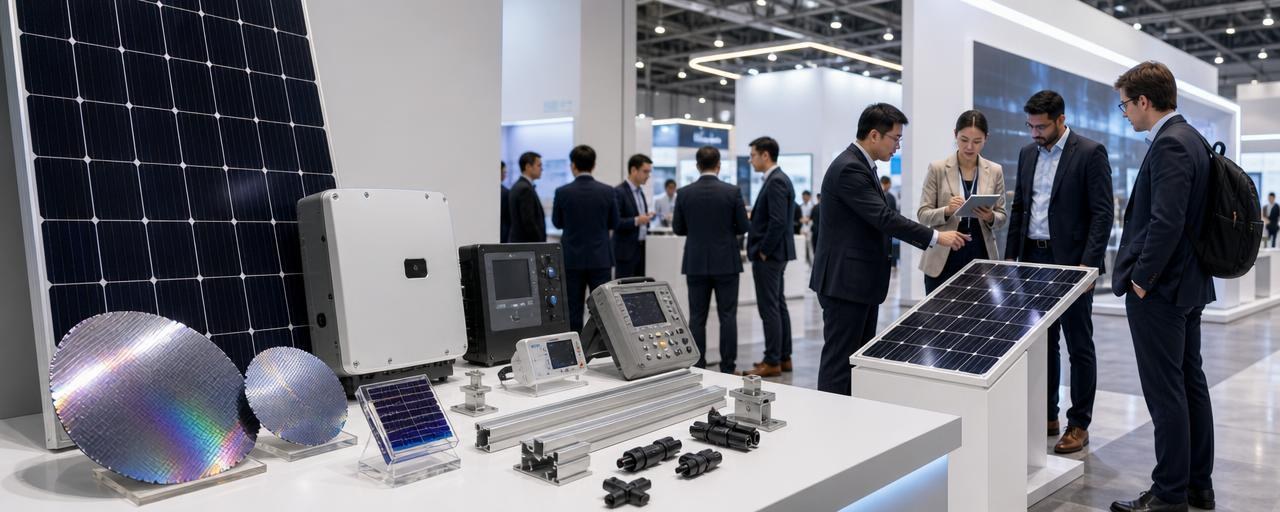
PV EXPO takes place on 24–26 March 2027 at Tokyo Big Sight, Tokyo, Japan. It is a specialist exhibition for photovoltaic power generation, spanning solar cells and modules, PV system components, installation and operation, production equipment, materials and testing. As part of SMART ENERGY WEEK, it places solar technology within a wider energy-industry setting. For manufacturers, project teams, utilities, engineering firms and building-sector companies, the practical value lies in comparing solutions against real product, project and procurement requirements.
PV EXPO Tokyo at a glance
| Item | Information |
|---|
| Event | PV EXPO |
| Edition | Tokyo Spring 2027 |
| Event type | Business exhibition |
| Dates | 24–26 March 2027 |
| Opening hours | 10:00–17:00 daily |
| Venue | Tokyo Big Sight |
| Address | 3-11-1 Ariake, Koto-ku, Tokyo, Japan 135-0063 |
| Organiser | RX Japan GK, co-organised with the Japan Photovoltaic Energy Association |
| Main sectors | PV generation systems, cells and modules, components, materials, installation and O&M, manufacturing equipment, evaluation and testing |
| Visitor registration | Free registration is offered by the organiser |
Why PV EXPO matters to solar professionals
Evaluate technology across the PV value chain
Solar-cell and module manufacturers can review materials, production machinery, measurement systems and related equipment in one specialist setting. Project developers and power producers can examine complete PV systems alongside components such as inverters, trackers, monitoring systems and mounting hardware. This makes the show useful for framing supplier discussions around performance, compatibility, installation and service needs rather than comparing product names alone.
Connect system design with installation and operation
The published exhibit profile extends beyond panels to system design, remote monitoring, grid-connected and stand-alone configurations, installation technologies and maintenance. EPC firms, utilities and corporate energy teams can use those categories to identify which parts of a project merit further technical review, while taking care to validate specifications and local requirements for each application.
See PV within a wider energy programme
PV EXPO is one of the exhibitions within SMART ENERGY WEEK. The organiser lists related fields including batteries, smart grids, hydrogen and fuel cells, wind, biomass and thermal power. Visitors with cross-technology responsibilities can therefore consider whether adjacent energy subjects are relevant to their plans as well as the solar-specific displays.
PV EXPO sectors and product groups
Photovoltaic systems, cells and modules
- Residential and industrial solar panels
- Crystalline and other solar cells and modules
- Building-integrated photovoltaics (BIPV)
- Off-grid and stand-alone systems
- Solar carports and PV generation systems
- Grid-connected and hybrid system applications
System components and power conversion
- Power conditioners and inverters
- Solar trackers and concentrators
- Capacitors, junction boxes and controllers
- Solar cables, plugs, sockets and connectors
- Data loggers, sensors, counters and analysers
- Lighting-protection devices and system accessories
Installation and mounting products
- Rail connectors, clips, spacers and slide nuts
- Roof hooks, joint clamps and interlocking frames
- Hanger bolts, anchor bolts and mounting hardware
- Installation tools and fitting accessories
- Fall-prevention devices and safety ropes
- Protective equipment for installation work
PV materials and device inputs
- Silicon ingots and wafers
- Compound semiconductors and module substrates
- Industrial gases, targets and electrodes
- Back sheets and frame materials
- Filling, sealing and interconnect materials
- Plastics and materials for PV devices
Manufacturing equipment
- Ingot and wafer production machinery
- Diamond wire saws and slice or cutting equipment
- Etching, coating and laser-scribing equipment
- Diffusion, baking and other process furnaces
- CVD and sputtering equipment
- Lamination, framing and module-assembly systems
Evaluation, testing and analysis
- Cell measurement machines and solar simulators
- Thickness gauges and electrical measuring equipment
- Ammeters, voltmeters and flowmeters
- Optical irradiation equipment and testers
- Substrate and appearance inspection systems
- Spectral-sensitivity measurement equipment
System integration, monitoring and O&M
- Remote monitoring systems
- PV system design software
- Grid-connected, hybrid and stand-alone system technologies
- Installation technologies and integration solutions
- Maintenance and operation technologies
- Monitoring and performance-analysis tools
Who should visit PV EXPO Tokyo?
Solar-cell, module and equipment manufacturers
Useful if you are assessing production inputs, manufacturing systems or test equipment:
- Compare materials, module components and manufacturing technologies
- Review cell and module measurement options
- Identify suppliers for a defined production or quality requirement
- Discuss integration and equipment specifications with relevant providers
Power producers, utilities and project investors
Useful if you are evaluating PV generation or system-side solutions:
- Review modules, inverters, trackers and system components
- Compare grid-connected, hybrid and stand-alone approaches
- Explore monitoring, operation and maintenance technologies
- Prepare project-specific questions on compatibility and service
EPC firms, general contractors and engineering companies
Useful if your work covers system design, construction or installation:
- Assess mounting products, connectors and installation systems
- Compare design software, monitoring and integration products
- Review safety equipment and installation accessories
- Identify technical points that need validation for a project
Building companies and corporate energy users
Useful if you are exploring PV for buildings, factories or commercial facilities:
- Review BIPV, residential and industrial PV categories
- Explore solar carports and system components
- Discuss installation, monitoring and operational requirements
- Compare options against site, design and procurement criteria
Trading companies and sales agencies
Useful if you source or distribute PV products:
- Map suppliers across modules, components and materials
- Compare product ranges and technical documentation
- Identify product categories that fit your customer portfolio
- Prepare questions about distribution, service and product support
Relevant roles include procurement and sourcing managers, PV engineers, production and quality managers, project developers, EPC and construction managers, operations teams, technical sales staff and energy-investment professionals.
Why visit PV EXPO Tokyo?
- Compare solar cells, modules and PV systems against a defined project or production need.
- Identify suppliers of inverters, monitoring, mounting products and other system components.
- Review manufacturing and testing equipment when planning production, quality or capacity decisions.
- Assess installation, integration and O&M technologies alongside system hardware.
- Discuss product compatibility, documentation, technical support and service requirements directly with relevant suppliers.
- Consider whether related SMART ENERGY WEEK exhibitions add useful context for a wider energy project.
Why exhibit at PV EXPO Tokyo?
PV manufacturers, component and materials suppliers, equipment makers, system integrators and O&M providers may consider exhibiting when they want to present products to professionals across the photovoltaic value chain. The organiser describes an international visitor base and holds three annual editions, offering recurring points of contact with the market. Exhibitors should define target buyer groups, prepare clear technical specifications and plan follow-up for discussions that warrant further evaluation. Before committing to a market or product launch, verify applicable requirements, distribution arrangements, service coverage and customer needs; the available market research does not establish PV-specific entry rules.
What makes PV EXPO distinct?
PV EXPO is dedicated to solar photovoltaic technology rather than the full renewable-energy portfolio. Its published exhibit categories link cells and modules with materials, manufacturing equipment, system components, installation, operation and testing. The organiser schedules three annual editions in Tokyo and Osaka; the next edition after the November 2026 Osaka show is Tokyo Spring in March 2027. The show also includes BIPV WORLD, an area for building-integrated photovoltaic technologies.
How to prepare before PV EXPO Tokyo
- Set a clear objective. Decide whether your priority is sourcing modules, improving manufacturing, assessing a PV project, finding components or reviewing testing equipment.
- Build a target list. Use the organiser’s current exhibitor and product information when it becomes available for this edition. Do not assume a previous-show directory represents the March 2027 floor.
- Rank conversations. Mark essential suppliers as A, relevant alternatives as B and exploratory visits as C, leaving room to investigate adjacent categories.
- Prepare technical questions. For modules, check application and system compatibility; for production equipment, ask about process scope and integration; for mounting and installation, define roof or site conditions; for testing tools, specify the measurements and accuracy needs.
- Plan follow-up. Record which specifications, documentation, quotations or service details you need after each discussion.
How to make the most of PV EXPO
Keep a consistent comparison record for each supplier: Company → product or system → project fit → specifications to confirm → next action. Separate confirmed technical information from assumptions, especially when comparing products for a particular site or production line. If your role spans solar and storage, grids or other energy technologies, identify the relevant concurrent shows in advance so the PV-focused visit remains purposeful.
PV EXPO visitor profile and business opportunities
| Visitor profile | Potential focus at PV EXPO |
|---|
| Solar-cell and module manufacturers | Materials, production machinery, test and measurement systems |
| Power producers and utilities | PV systems, inverters, monitoring, operation and maintenance |
| EPC and engineering firms | System design, integration, mounting, installation and safety products |
| Building and construction companies | BIPV, solar carports, building applications and installation systems |
| Corporate energy users | Residential, industrial and commercial PV system options |
| Investors and project developers | System components, supplier evaluation and project-specific technical questions |
| Trading companies and sales agencies | Supplier ranges, product categories and distribution discussions |
Travelling to PV EXPO Tokyo
The official venue information gives the address as 3-11-1 Ariake, Koto-ku, Tokyo, Japan 135-0063. It identifies Kokusai-tenjijo, Tokyo Big Sight and Ariake stations as walkable to the venue, and notes rail connections on the Rinkai and Yurikamome lines. Confirm the event’s current access arrangements before travelling.
Practical information for international visitors
| Item | Verified information |
|---|
| Venue address | 3-11-1 Ariake, Koto-ku, Tokyo, Japan 135-0063 |
| Airports named in the organiser’s access guide | Haneda Airport and Narita Airport |
| Nearby rail stations | Kokusai-tenjijo, Tokyo Big Sight and Ariake |
| Rail lines noted by the organiser | Rinkai Line and Yurikamome Line |
Check entry, visa, accommodation, transport and payment requirements for your circumstances before travel. ilikevents can assist with visit planning and travel arrangements.
One day or several days at PV EXPO?
A focused one-day visit may suit buyers with a short supplier shortlist or one technical objective. Allow more time if you need to compare several product groups, discuss manufacturing and testing equipment, or visit relevant concurrent energy exhibitions. The show runs for three days, 10:00–17:00; prioritise appointments and halls using the organiser’s current information before setting a schedule.
After PV EXPO: turn discussions into decisions
Sort contacts into immediate follow-up, further evaluation and market-information groups. For suppliers under consideration, request the product specifications, compatibility details, test information, service arrangements and commercial terms needed for a fair comparison. Share project requirements with technical colleagues, record unresolved questions and agree on a next step before the conversation goes cold.
PV EXPO Tokyo visitor checklist
Before
- ☐ Define your PV project, sourcing or production objective.
- ☐ Review current registration, access and exhibitor information.
- ☐ Prepare technical questions and a priority supplier list.
During
- ☐ Record products, specifications and points to verify.
- ☐ Compare solutions against the same project criteria.
- ☐ Note the contact and agreed follow-up for each priority discussion.
After
- ☐ Request missing technical and commercial information.
- ☐ Evaluate suppliers and systems with the relevant project team.
- ☐ Set next actions for promising product or market discussions.
Is PV EXPO Tokyo worth visiting?
PV EXPO is most relevant to professionals with a specific solar manufacturing, sourcing, installation or project question. Its coverage from cell materials and production equipment through systems, components and O&M can support structured comparisons across the PV chain. A visit is more useful when you arrive with technical criteria, target suppliers and a plan to follow up; walking the floor without a defined objective makes it harder to turn product discovery into a decision.
Closing thought
What do you need to confirm about a PV product, supplier or project that cannot be settled by a catalogue search alone? Discover. Compare. Evaluate. Follow up.
Solar power opportunities in Japan
Market indicators
Japan’s electricity mix provides context for PV and related energy-system discussions. In 2024, renewables accounted for an estimated 26.7% of total electricity generation, including self-consumption, and solar represented an estimated 11.4%. These are generation shares, not PV equipment-market size or procurement figures. The estimates come from ISEP’s preliminary report on Japan’s 2024 renewable-energy generation mix.
- Renewables share of electricity generation, including self-consumption: estimated 26.7% in calendar year 2024.
- Solar share of total electricity generation: estimated 11.4% in calendar year 2024.
- Variable renewable generation from solar and wind: estimated 12.6% of generation in calendar year 2024.
- Stationary battery storage installed: reported at over 10 GWh in 2025, mainly on the demand side and especially residential; this does not establish grid-scale demand.
Potential commercial directions
These indicators may make it worthwhile for PV suppliers and buyers to examine storage, power conversion, monitoring, control and distribution solutions alongside solar generation. Manufacturers and integrators could use supplier discussions to test where their products fit; visitors could compare modules, inverters, storage and control products against defined projects. The cited figures do not quantify demand for any specific product, and project economics, interconnection and customer requirements need case-specific validation.
Market-entry conditions
No industry-specific market-entry rule is stated here. Companies should verify current technical, customer, distribution and project requirements for their own products and applications before making commercial decisions.
Explore Event Opportunities
Use PV EXPO to identify relevant products, compare solar technologies and plan conversations around your business or project priorities with support from ilikevents.
Get Expert Assistance from ilikevents to plan your visit or exhibition participation.
See the ilikevents services for this event
For further information, please click
here .