Gulfood Manufacturing 2026: practical guide
3–5 November 2026 at Dubai World Trade Centre, Dubai, United Arab Emirates. Organised by Dubai World Trade Centre (DWTC), this trade exhibition covers the food and beverage manufacturing supply chain. Its 2026 programme includes live technology demonstrations, Innovation Tours and a FoodTech Summit. The organiser lists 2,500+ exhibitors and 20 halls for 2026; these are announced upcoming-edition figures, not post-show totals. Daily hours are 10:00–18:00 on 3–4 November and 10:00–17:00 on 5 November.
Why Gulfood Manufacturing matters
Compare connected production stages
The product scope covers ingredients, processing, packaging, printing and labelling, automation and controls, supply chain and warehouse management. Visitors can consider equipment and materials alongside the systems connecting them.
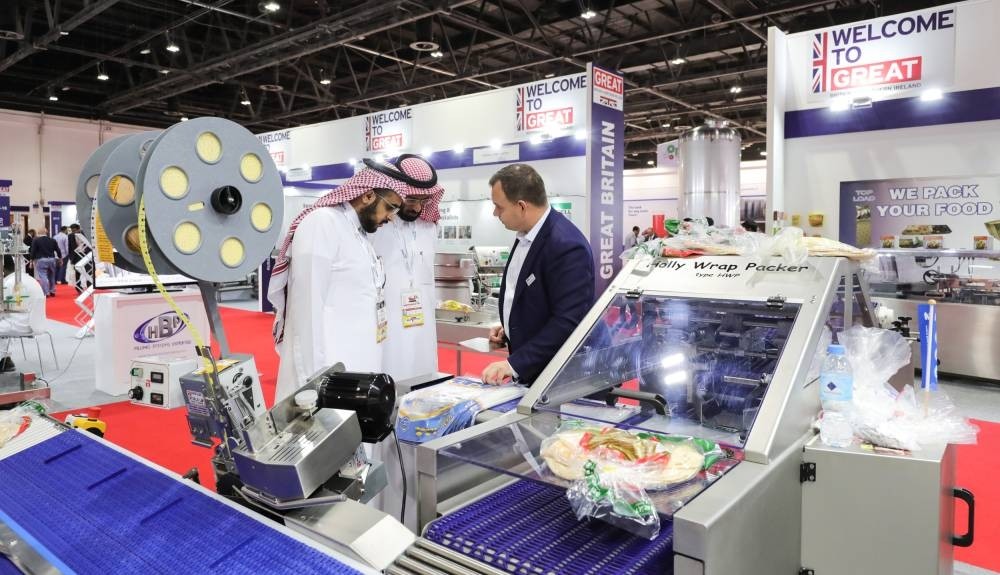
See technology in operation
The organiser advertises live demonstrations of machinery, production lines, packaging systems, robotics and digital platforms, plus Innovation Tours. Use these formats to identify questions for technical discussions; a demonstration alone does not establish performance in your own plant.
Follow industry discussion
The 2026 programme advertises a FoodTech Summit with 100+ international speakers and a Global Leaders Series. Published themes include AI, circularity, resilience, food sovereignty, supply-chain transformation and future production systems. Check the current session schedule before planning around a specific talk.
Who should visit Gulfood Manufacturing?
Food and beverage manufacturers and plant leaders
Useful if you are reviewing a production line, planning capacity changes or seeking options across ingredients, processing and packaging.
- Compare equipment functions, operating requirements and integration needs.
- Assess whether a category fits a current plant or product-development project.
- Ask about throughput, changeover, cleaning, maintenance and technical support.
- Record specifications and documents needed before an investment decision.
Engineers, plant designers and maintenance teams
Useful if you specify, install, operate or maintain food-production systems.
- Prioritise demonstrations that match your technical remit.
- Compare control, robotics, packaging-line and warehouse-management approaches.
- Prepare questions about integration, utilities, safety, servicing and compatibility.
- Note details that need checking against site conditions and project specifications.
Procurement teams, buyers and distributors
Useful if you source ingredients, machinery, packaging or production technologies, or develop a supplier portfolio.
- Group target suppliers by category and business priority.
- Compare specifications, lead times, service and commercial terms where available.
- Identify products needing samples, technical files or internal approval.
- Clarify territory and partner expectations directly with prospective suppliers.
Research, development and quality professionals
Useful if you work on formulation, process improvement, quality control or manufacturing innovation.
- Explore ingredient and processing options against a defined product brief.
- Ask how equipment or digital tools support traceability and quality control.
- Select relevant summit sessions and note ideas requiring technical validation.
- Record sample and documentation needs for internal review.
What can you find at Gulfood Manufacturing?
- Ingredients: solutions for food and beverage production and formulation.
- Processing: machinery and systems, including equipment shown in demonstrations.
- Packaging: materials, machinery and production-line solutions.
- Printing and labelling: products and systems for packaged food and beverages.
- Automation and controls: automation, robotics, controls and digital manufacturing.
- Supply chain: technologies for traceability and logistics.
- Warehouse management: systems for handling and movement of finished products.
What makes Gulfood Manufacturing different?
It combines a broad manufacturing-supply-chain showcase with live technology and an industry conference programme. The organiser describes 20 halls of working machinery, production lines, packaging systems, robotics and digital platforms. Innovation Tours, the FoodTech Summit and Global Leaders Series add guided and conference formats. These may help visitors connect product comparisons with wider questions about production systems and technology adoption; usefulness depends on each visitor’s priorities.
What should you try to achieve?
If you lead a manufacturing plant
Leave with a shortlist of options for one defined production challenge. Record line requirements, performance criteria and documents needed for comparison.
If you specify or maintain equipment
Identify the technical questions that determine fit with your operation. Note integration, utilities, maintenance, safety and support questions.
If you buy or distribute products
Map supplier conversations to a category, target customer and next step. Separate products ready for evaluation from those needing further supply, service or terms information.
If you work in product development or quality
Find ingredients, process approaches or quality technologies to assess against a specific brief. Capture the samples, specifications or validation evidence required.
How to prepare before Gulfood Manufacturing
1. Define an objective
Choose a project or question such as a packaging-line change, ingredient requirement, maintenance issue or supplier review. Write down the specification, constraints and decision criteria.
2. Build a targeted exhibitor list
Use the organiser’s 2026 exhibitor directory to shortlist companies by relevant product group. Verify products and availability directly.
3. Prioritise time
Classify companies A (essential), B (useful) and C (if time allows). Focus first on your project’s main categories; the organiser describes a 20-hall show.
4. Prepare supplier questions
- Which configuration matches my capacity and application?
- What are the line speed, changeover and operating requirements?
- How does the solution integrate with upstream and downstream processes?
- What utilities, footprint, installation and operator training are required?
- How are cleaning, maintenance, spare parts and service handled?
- Which quality, safety, food-contact or traceability documents are available?
- For ingredients, what specifications, formats and sample options can be provided?
- For packaging, which materials, formats, print and labelling systems are compatible?
- What lead times, delivery conditions and commercial terms apply to my market?
5. Check the current programme
Review FoodTech Summit, Global Leaders Series and Innovation Tours information. Confirm session schedules before fixing meetings around a specific item.
How to make the most of the exhibition
For each relevant company, record: Company → product or system → fit with your requirement → evidence to request → next action. At demonstrations, note the application and configuration shown, then ask about integration, maintenance and operating conditions. Compare equivalent specifications across suppliers rather than collecting brochures without context.
Plan your time realistically
Group visits by priority and leave time for supplier conversations rather than trying to cover every category.
- First: visit essential suppliers tied to your main objective.
- Middle: attend a relevant summit session or Innovation Tour, then visit secondary targets.
- Later: revisit suppliers to clarify technical or commercial questions.
- End of day: organise notes and assign follow-up actions.
Official hours are 10:00–18:00 on 3 and 4 November and 10:00–17:00 on 5 November 2026.
Beyond the exhibition floor
The advertised 2026 programme includes the FoodTech Summit, Global Leaders Series and Innovation Tours. Published themes include AI, circularity, resilience, food sovereignty, supply-chain transformation and future production systems. Check the final session list and choose talks linked to a current plant, sourcing or technology question.
Networking and supplier conversations
Prepare a concise introduction to your organisation, target market and requirement. Ask suppliers for a useful next step, such as a specification sheet, technical meeting, sample discussion or offer based on defined needs. For distribution or service relationships, clarify territory and responsibilities directly.
Record the product discussed, contact role, open question and agreed follow-up. This helps separate an active project from longer-term market research.
Travelling to Gulfood Manufacturing
The venue is Dubai World Trade Centre on Sheikh Zayed Road in Dubai. The event website provides a venue map and visitor registration information. Check current access guidance before travelling; specific shuttle, rail and parking arrangements are not stated here.
One day or several days?
One day
May suit a narrow objective and a short, preselected exhibitor list. Focus on one or two product groups.
Two days
May suit comparisons across connected stages such as processing and packaging, or a mix of supplier meetings and sessions.
Three days
May help with a broader review across ingredients, equipment, automation and supply-chain systems. Confirm the shorter hours on the final day.
After Gulfood Manufacturing
Sort contacts into A – active project, B – potential fit and C – market intelligence. For active projects, send the supplier your application, capacity, product and timing requirements and request comparable information. For potential fits, clarify missing specifications, samples, service conditions or terms. Share relevant findings with engineering, quality, procurement and operations before making decisions.
Who should consider exhibiting?
The 2026 product scope includes ingredients, processing, packaging, printing and labelling, automation and controls, supply-chain and warehouse-management solutions. It is relevant to companies serving food and beverage manufacturing. Define the audience and business objective you want to reach, the demonstration or technical material you can provide and the follow-up capacity needed. The organiser lists 2,500+ exhibitors for the upcoming edition; this is an announced figure, not a completed-edition result.
Gulfood Manufacturing visitor checklist
Before
- ☐ Define one sourcing, production or product-development objective.
- ☐ Shortlist exhibitors and sessions.
- ☐ Prepare technical, quality and commercial questions.
- ☐ Confirm registration, hours and venue access.
During
- ☐ Compare like-for-like products and record applications.
- ☐ Note specifications, service conditions and open questions.
- ☐ Prioritise supplier meetings and relevant programme items.
- ☐ Agree a follow-up action where there is a credible fit.
After
- ☐ Share findings with relevant colleagues.
- ☐ Request missing technical files, samples, lead times or terms.
- ☐ Compare options against consistent project criteria.
Is Gulfood Manufacturing worth visiting?
It is most relevant to people who make, source, specify, distribute or improve food and beverage manufacturing products and systems. Its broad supply-chain scope, live demonstrations and announced conference programme can support supplier comparison and technical exploration. A defined need and follow-up plan help turn a large showcase into useful work.
Gulfood Manufacturing 2026 at a glance
| Item | Information |
|---|
| Dates | 3–5 November 2026 |
| Venue | Dubai World Trade Centre, Dubai, United Arab Emirates |
| Organiser | Dubai World Trade Centre (DWTC) |
| Sectors | Ingredients, processing, packaging, printing and labelling, automation and controls, supply chain, warehouse management |
| Programme | FoodTech Summit, Global Leaders Series, Innovation Tours and live demonstrations advertised for 2026 |
| Announced scale | 2,500+ exhibitors and 20 halls for 2026 |
| Daily hours | 10:00–18:00 on 3–4 November; 10:00–17:00 on 5 November |
Make the visit purposeful
Choose the production question that matters most, compare solutions against consistent criteria and leave with clear technical and commercial next steps. Discover. Compare. Evaluate. Follow up.
Food manufacturing opportunities in the United Arab Emirates
Market size and demand
A report published on the event organiser’s website cites a 2025 World Economic Forum report saying the UAE imports almost 90% of its food. This describes food supply dependence, not the value of the food-processing machinery market. The article also reports that a government official said the UAE is updating its National Food Security Strategy 2051 with the aim of growing half of the country’s crops locally.
Market drivers and commercial opportunities
The stated local-crop ambition and the country’s reported food-import dependence make domestic food resilience a relevant policy context. The article does not identify funded projects, procurement plans or specific equipment demand, so suppliers should treat the following as areas to investigate rather than established market gaps.
- Processing and preservation: food-processing equipment makers could examine whether local crop value chains need sorting, processing or preservation capacity; buyers should verify application, scale and operating conditions.
- Packaging and production systems: packaging, labelling and automation providers could investigate fit with local food production and processing needs. Actual project pipelines, required specifications and commercial terms remain to be established.
What this could mean for exhibitors
Manufacturers of processing, packaging, labelling and automation solutions may use industry conversations to test whether their systems suit local food-production priorities. They should validate demand, local operating requirements and any applicable approvals before committing resources; the available article does not establish buyer access or sales outcomes.
What this could mean for visitors
Food manufacturers, procurement teams and technical professionals could compare technologies for processing and packaging against a defined plant or product need. The reported strategy direction provides context, but visitors should ask suppliers for technical evidence and confirm local requirements independently.
Discover Dubai
Dubai World Trade Centre is in Dubai itself. Visitors can plan time in the city around the exhibition days and explore its historic neighbourhood and creekside heritage.
Al Fahidi Historical Neighbourhood
This historic district features heritage architecture, galleries and museums.
Dubai Creek abra crossing
A traditional abra crossing offers a way to experience the historic creekside setting.
Both attractions are in Dubai. Check current visitor information and leave time for the event commitments you have prioritised.
For further information, please click
here .