GOPE 2027: International Conference on Oil, Gas and Petroleum Engineering
9–11 September 2027 · Olympia Hotel, Events & Spa, Valencia, Spain · Hybrid participation
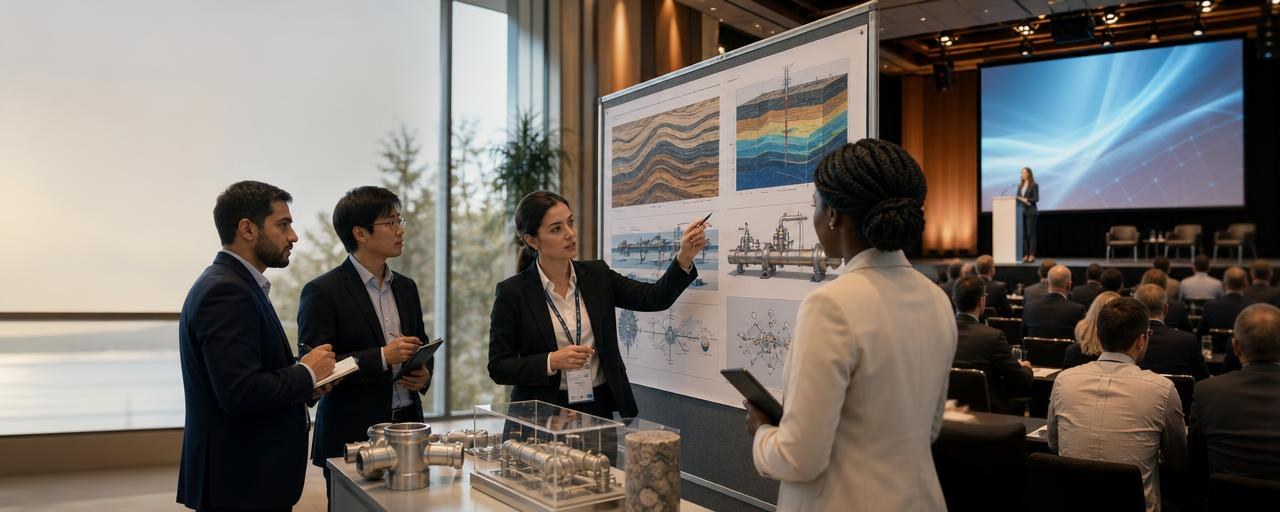
The 6th edition of GOPE brings together petroleum engineers, geoscientists, researchers and energy professionals for technical presentations and professional exchange. Its scope spans upstream, midstream and downstream engineering, including exploration, reservoir characterisation, drilling, production, pipelines, gas processing, LNG, refining and petrochemicals. The programme also addresses digital operations, methane reduction, carbon capture, hydrogen and decarbonisation.
GOPE 2027 at a glance
| Item | Information |
|---|
| Event | GOPE 2027, the 6th International Conference on Oil, Gas and Petroleum Engineering |
| Type | International technical conference |
| Dates | 9–11 September 2027 |
| Venue | Olympia Hotel, Events & Spa, Carrer Mestre Serrano, 5, 46120 Alboraia, Valencia, Spain |
| Format | In person and online |
| Organiser | Magnus Group LLC |
| Core themes | Oil, gas and petroleum engineering across exploration, production, transport, processing, refining and energy transition |
| Participation | Oral and poster presenters, in-person and virtual listeners |
| Abstract deadline | First submission round closes 27 November 2026 |
| Latest published highlights | For GOPE 2026, the organiser lists 451 speakers, participants from 60 countries and 286 universities or institutes; organiser-published figures |
The 2027 event is presented as a hybrid conference. The organiser's current pages list the technical subjects and submission options; check its programme and registration information for updates.
Why GOPE matters to petroleum engineering professionals
Connect engineering disciplines
Reservoir, drilling, production, process and pipeline specialists can compare how decisions in one part of the hydrocarbon chain affect performance elsewhere. The conference's coverage from exploration through refining makes cross-disciplinary discussion relevant to operating teams and researchers.
Explore technical responses to changing priorities
Sessions include methane reduction, carbon capture and storage, hydrogen, decarbonisation and the role of oil and gas in net-zero goals. These subjects sit alongside established petroleum-engineering topics, allowing delegates to examine operational practice and transition-related research in the same professional setting.
Share research and professional experience
Oral and poster presentations, technical workshops and researcher sessions provide routes for communicating work and engaging with peers. The organiser's 2026 highlights list 451 speakers, 60 countries and 286 universities or institutes; these are organiser-published participation figures for the previous edition.
Technical themes at GOPE
Exploration, geology and reservoir engineering
- Hydrocarbon exploration technologies and geophysical or geological methods
- Reservoir characterisation, monitoring, logging and testing
- Enhanced oil recovery and unconventional resources
- Shale gas, tight oil and heavy oil
- Reservoir modelling and interpretation
Drilling and well construction
- Drilling engineering and well construction
- Well stimulation and hydraulic fracturing techniques
- Sustainable drilling and lower-impact engineering approaches
- Well integrity and operational performance
Production and field operations
- Production optimisation and flow assurance
- Offshore and deepwater operations
- Automation, robotics and connected operations
- Digital twins, smart oilfields, artificial intelligence and data analytics
Natural gas, pipelines and transport
- Pipeline engineering, integrity and corrosion management
- Natural-gas processing and LNG technologies
- Storage and transportation of crude oil and natural gas
- Gas-to-liquids and related conversion technologies
Refining and petrochemicals
- Advanced refining technologies and catalysis
- Petrochemical engineering and polymer production
- Process optimisation and refinery automation
- Gas sweetening, sulphur removal and carbon capture in refining
Environment and the energy transition
- Methane emissions reduction and flaring minimisation
- Carbon capture, utilisation and storage
- Hydrogen production and its role in the energy transition
- Renewable fuels, biofuels and alternative-energy integration
- Water treatment, waste management, health, safety and environmental challenges
Who should attend GOPE?
Petroleum, reservoir and drilling engineering teams
Useful if you work on subsurface characterisation, well design, drilling, stimulation or recovery:
- Petroleum and reservoir engineers
- Drilling and well-completion specialists
- Geoscientists and geophysicists
- Well-logging, testing and monitoring professionals
- Unconventional-resource specialists
Focus on methods, modelling assumptions and operational constraints that can be compared across technical presentations.
Production, process, pipeline and refinery professionals
Useful if your work concerns moving, processing or refining hydrocarbons:
- Production and process engineers
- Pipeline-integrity and corrosion specialists
- Natural-gas and LNG professionals
- Refinery and petrochemical engineers
- Offshore and deepwater operations teams
Prioritise sessions that relate directly to your operating system, performance issue or investment question.
Researchers, academics and students
Useful if you are developing or evaluating engineering research:
- University and institute researchers
- Academic faculty and research supervisors
- Graduate and doctoral students
- Early-career petroleum engineers
- Authors preparing oral or poster presentations
Use the technical programme to identify relevant sessions, then prepare a concise question or research summary for discussion.
Energy consultants, service companies and technology providers
Useful if you support operators or develop engineering tools and services:
- Energy consultants and technical advisers
- Oilfield service-company professionals
- Engineering and technology providers
- Digital oilfield and analytics specialists
- Regulators and professionals following technical and environmental practice
The listed industry showcases and technical themes can help you identify relevant conversations; specific exhibitors or commercial meetings are not established in the published information.
Why attend GOPE?
- Compare reservoir-characterisation and recovery approaches relevant to a defined asset or research question.
- Review drilling, well-construction and stimulation methods against your technical challenges.
- Explore pipeline integrity, gas processing, LNG and flow-assurance topics across the midstream chain.
- Follow engineering approaches in refining, petrochemicals and process optimisation.
- Assess how digital twins, AI and data analytics are being applied to petroleum operations.
- Discuss methane management, carbon capture, hydrogen and decarbonisation alongside established operations.
- Share research through an oral or poster presentation, or join as an in-person or virtual listener.
How to prepare for GOPE
1. Set a technical objective
Choose a question you want the conference to help you investigate: a reservoir uncertainty, well-performance issue, pipeline-integrity challenge, process bottleneck, data application or emissions-management problem. A specific question makes it easier to select sessions and evaluate what you learn.
2. Select the most relevant themes
Use the organiser's scientific-session list to prioritise topics. Mark essential sessions first, then add adjacent subjects that could provide useful context. The conference covers a broad engineering range, so a short priority list is more practical than trying to follow every track.
3. Prepare to contribute
Authors can submit an abstract for oral or poster presentation. The first submission round closes on 27 November 2026. Prepare the work and supporting materials in line with the organiser's current instructions, and confirm the selected participation format before submitting.
4. Plan your registration and format
The organiser lists presenter and listener participation, with in-person and virtual options. Early-bird registration is shown as closing on 1 December 2026. Check the organiser's registration page for current fees, eligibility, deadlines and any subsequent changes before making arrangements.
Make the technical programme useful
Keep a simple record for each presentation or discussion: Engineering question → method or technology → operating conditions → evidence presented → follow-up action. For example, a pipeline-integrity session may prompt you to note the inspection approach, material or corrosion conditions discussed, and what information you need to compare it with your own system. Distinguish a research result from a field-proven application, and record the assumptions behind any performance claim.
At the end of each day, identify one finding to investigate, one person or team to follow up with, and one question that still needs evidence. For online participation, check the organiser's access instructions and schedule in advance.
Presenting research at GOPE
The conference accepts abstract submissions for oral and poster presentation, including virtual presentation options. Researchers should select the technical subject that best fits the work, make the engineering question and method clear, and explain the relevance of the findings to petroleum engineering. The organiser's first-round deadline is 27 November 2026; submission requirements and acceptance details should be checked directly with Magnus Group.
GOPE visitor profile and professional interests
| Participant profile | Relevant conference interests |
|---|
| Petroleum and reservoir engineers | Reservoir characterisation, recovery techniques, monitoring and production optimisation |
| Drilling and well specialists | Drilling engineering, well construction, stimulation and sustainable drilling |
| Geoscientists | Exploration technologies, geophysical methods and subsurface interpretation |
| Production and process engineers | Flow assurance, automation, refining and process optimisation |
| Pipeline and gas professionals | Integrity, corrosion management, gas processing, LNG and transport |
| Researchers and students | Technical presentations, poster exchange and cross-disciplinary discussion |
| Consultants and service-company professionals | Engineering methods, digital operations and technical developments across the value chain |
| Regulators and environmental professionals | HSE, methane reduction, carbon management and regulatory challenges in petroleum operations |
Practical information for international participants
| Item | Information |
|---|
| Venue municipality | The venue address is in Alboraia, within the Valencia metropolitan area. |
| Airport shown on the venue map | Valencia Airport |
| Participation format | In-person attendance in Valencia or online participation |
Confirm travel, entry and accommodation requirements for your own circumstances before making arrangements. The organiser's venue and registration information should be checked for updates.
One day or all three days?
The conference runs for three days. A focused one-day attendance may suit a participant with a narrow technical objective and a short list of priority sessions. Two or three days can provide more time to follow connected subjects across reservoir, drilling, production, processing and transition themes, and to present or discuss research. Use the published schedule to decide which days best match your work.
After GOPE: turn technical exchange into action
Sort your notes into three groups: A — act now: a relevant method, paper or contact that needs prompt follow-up; B — evaluate: a technology or research result that requires further technical review; and C — keep for context: useful background for a later project or study.
For potential engineering applications, request the technical detail needed to assess fit: operating conditions, assumptions, data requirements, performance measures, limitations and evidence from comparable use. For research discussions, share the relevant paper or abstract and agree a clear next step. Keep conclusions proportionate to the evidence presented.
GOPE participation checklist
Before
- Choose a technical objective and priority sessions.
- Check abstract and registration deadlines and the organiser's latest requirements.
- Confirm in-person or virtual participation and plan accordingly.
- Prepare questions, presentation materials and a concise professional introduction.
During
- Record methods, operating assumptions and limitations—not just conclusions.
- Connect each presentation to a technical question or project need.
- Note follow-up actions and the information needed to evaluate them.
After
- Review notes while details are fresh.
- Follow up on research or technical discussions with a specific question.
- Separate evidence-backed findings from ideas that need further validation.
Is GOPE worth attending?
GOPE is most relevant to professionals and researchers whose work intersects with its published oil, gas and petroleum engineering topics. Its hybrid format and oral and poster presentation options make it suitable for technical participants and research contributors. Value depends on selecting the right sessions, asking focused questions and following up on useful findings; attending without a defined technical objective is less likely to produce actionable learning.
Take a focused question into GOPE
What engineering problem, research question or professional perspective do you want to advance through three days of technical exchange?
Understand. Compare. Discuss. Apply. Follow up.
Explore Event Opportunities
Explore how GOPE can support your professional learning, research presentation or participation planning, with practical assistance from ilikevents.
Get Expert Assistance from ilikevents to plan your conference visit and registration.
See the ilikevents services for this event
For further information, please click
here .