Munich transport logistic 2027
transport logistic takes place from 26–29 April 2027 at Messe München, Munich, Germany. Organised by Messe München GmbH, the international trade fair covers logistics, mobility, IT and supply-chain management. It brings together freight services, transport equipment, digital systems and intralogistics in one professional exhibition. The event includes air cargo Europe, a dedicated air-freight segment.
Why Munich transport logistic matters
See the connected freight system
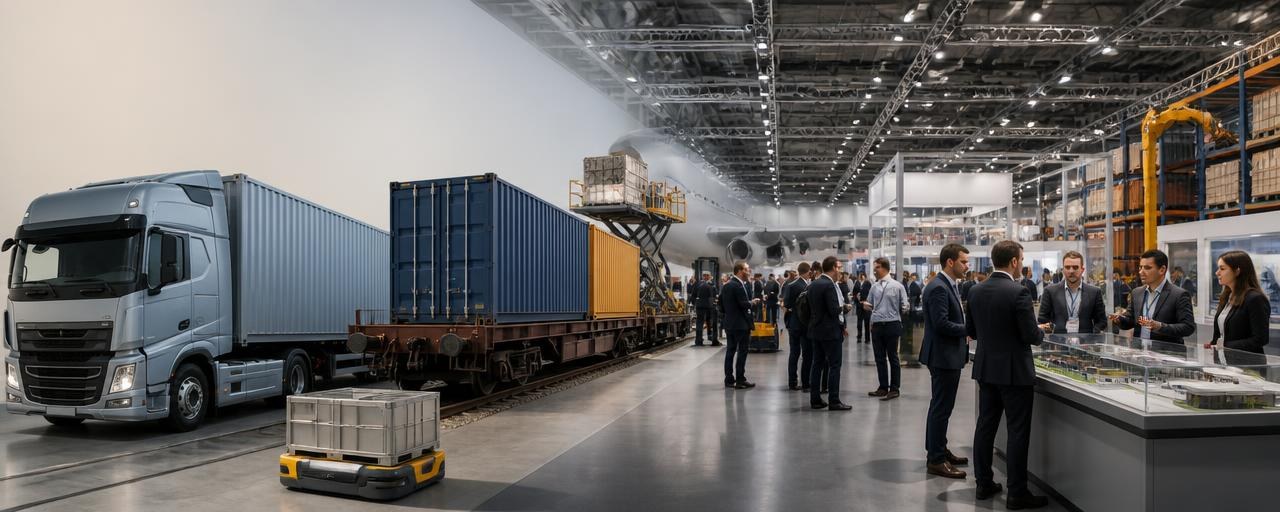
The exhibition spans road, rail, water and air transport alongside logistics services and technology. Visitors can compare how freight equipment, warehouse operations and digital systems fit different parts of a supply chain.
Compare systems and services
Official topic areas include logistics and freight services; IT, telematics, e-business and telecommunications; equipment for freight transport; and intralogistics, warehouse management, auto-ID and packaging.
Understand the event’s scale
- 2,722 exhibitors from 73 nations at the 2025 edition, according to its final report.
- More than 77,000 visitors from over 130 countries and regions in 2025.
- 150,000 m² of exhibition space in 2025.
- The 2025 exhibition used 12 halls plus an outdoor area.
These are reported results for the previous edition, not forecasts for 2027. The final report and the organiser’s figures page publish slightly different exhibitor totals; this guide uses the dated final report.
Who should visit Munich transport logistic?
Logistics service providers and freight operators
In 2025, 60% of surveyed visitors came from logistics services. Prioritise providers, transport equipment and IT that relate to your lanes, modes, service levels and operating constraints. Record technical questions and follow up on solutions that merit a closer assessment.
Manufacturers and supply-chain teams
Industry and manufacturing accounted for 23% of the 2025 visitor profile. Use the exhibition to review inbound, production and distribution logistics, compare service models and identify where warehouse, packaging or transport systems might fit your operations.
Air-cargo professionals
air cargo Europe runs alongside transport logistic. The organiser’s 2025 final report describes two halls for the air-freight segment and highlights medical goods, e-commerce and other time-critical deliveries. Visitors in this field can focus their plans on cargo handling, air-freight services and connected supply-chain questions.
What can you find at Munich transport logistic?
Services, freight transport and logistics
- Logistics, transport and trucking services
- Freight and supply-chain services
IT, telematics and e-business
- IT and telematics for logistics
- E-business and telecommunications solutions
- Systems for controlling transport processes and traffic management
Equipment for freight transport
- Road, rail, water, air and combined-transport equipment
- Containers and solutions for special freight
Intralogistics and warehouse management
- Intralogistics and warehouse-management systems
- Auto-ID and packaging
What makes Munich transport logistic distinctive?
Its scope connects multiple freight modes with the services and technologies that coordinate them. The 2025 final report described conference panels, expert presentations and workshops on cybersecurity, artificial intelligence, digitalisation, sustainability, alternative drive systems and supply-chain issues. These are examples from 2025, not a promise of the 2027 programme. air cargo Europe adds a focused air-freight component to the wider logistics exhibition.
What should you try to achieve?
If you work in logistics or freight operations
Identify a short list of providers or systems to evaluate against a defined route, cargo type or operational problem.
If you manage manufacturing or supply chains
Compare options for one specific flow—such as inbound materials, warehouse handling or distribution—and note the information needed for an internal decision.
If you work in air cargo
Map relevant cargo services and technologies to a defined requirement, such as handling time-sensitive freight.
How to prepare before Munich transport logistic
- Define your purpose. Choose a sourcing, operating, technology or market question to answer.
- Build a target list. Review the organiser’s exhibitor directory when the 2027 listing is available; sort companies into must-meet, useful and explore-if-time groups.
- Prepare comparable questions. For transport providers, ask about modes, routes, service scope and operating requirements. For IT, ask about system functions, data exchange and integration. For equipment, note capacity, cargo type and site constraints.
- Plan around the hall map. The official travel page displays a 2027 site plan. Group priority stands and relevant topic areas to reduce backtracking.
- Check current details. The organiser’s visitor and travel pages are the place to confirm ticketing, programme and access information as 2027 updates are released.
How to make the most of the exhibition
Use one consistent record for each useful conversation: Company → product or service → operational fit → contact → next action. For example, note which freight modes a provider supports, the cargo or workflow discussed, and what technical or commercial information is still needed. Compare like with like rather than collecting brochures without a decision question.
Beyond the exhibition floor
The 2025 programme included panels, expert presentations and workshops, with discussion of AI, cybersecurity, digitalisation, sustainability and alternative drives. Treat these as previous-edition examples. Review the organiser’s 2027 programme when it is published and select sessions that address a real operating or investment question.
Networking at Munich transport logistic
Prepare a brief introduction to your role, transport modes or supply-chain responsibilities, the challenge you are addressing and the kind of information or partner you need. Ask specific questions, capture the agreed next step and request technical or service details only when they support your evaluation. A useful conversation is one that clarifies fit, constraints or a follow-up decision.
Travelling to Munich transport logistic
The organiser lists the venue address as Am Messesee 2, 81829 Munich, Germany. Its travel-information page currently states that detailed travel guidance refers to the 2025 edition and that 2027 information will follow. Check the current public-transport, parking and airport arrangements before making travel plans.
One day or several days?
The 2025 edition occupied 12 halls and an outdoor area over four days. A focused visitor with a short target list may plan around priority meetings and one or two topic areas. Visitors comparing multiple freight modes, supply-chain services and technology areas may benefit from allowing more time. These are planning considerations, not a prescribed visit duration.
After Munich transport logistic: turn notes into decisions
Within a few days, sort contacts into immediate follow-up, potential follow-up and market-information-only groups. For priority suppliers, request the missing specifications, service scope, integration details or commercial terms needed for comparison. Record unresolved questions and assign an owner and next action. Evaluate any proposal against your actual route, cargo, workflow and operating requirements.
Who should consider exhibiting?
The organiser’s sectors indicate relevance for providers of logistics and freight services; freight-equipment suppliers across road, rail, water and air; logistics IT, telematics and e-business companies; intralogistics, warehouse, auto-ID and packaging providers; and air-cargo businesses. Exhibitors may define a clear objective—such as explaining a system, assessing market interest or identifying suitable distribution conversations—and agree how to qualify and follow up on enquiries. Participation does not guarantee commercial outcomes.
Munich transport logistic visitor checklist
Before
- ☐ Set one primary business or technical objective.
- ☐ Prioritise companies and sessions when the current directory and programme are available.
- ☐ Prepare questions matched to freight modes, cargo and operating needs.
- ☐ Confirm the 2027 visitor, venue and travel information.
During
- ☐ Record product or service fit, constraints and the next action.
- ☐ Compare alternatives against the same requirements.
- ☐ Leave time for the relevant halls and outdoor exhibits.
After
- ☐ Follow up on priority conversations with specific requests.
- ☐ Compare options against internal requirements before making commitments.
- ☐ Share findings with the teams responsible for transport and supply-chain decisions.
Is Munich transport logistic worth visiting?
The event is most relevant to logistics services, freight transport, manufacturing supply chains and air cargo professionals who have a defined question to investigate. Its broad coverage can support cross-mode comparison, while a focused plan helps visitors use the time productively. The practical value depends on choosing relevant providers, recording constraints and following up on the information needed to make a decision.
Munich transport logistic 2027 at a glance
| Item | Information |
|---|
| Event | transport logistic |
| Date | 26–29 April 2027 |
| Venue | Messe München |
| City and country | Munich, Germany |
| Organiser | Messe München GmbH |
| Main industries | Logistics, mobility, freight transport, IT and supply-chain management |
| Audiences | Logistics providers, freight operators, manufacturers, supply-chain teams and air-cargo professionals |
| Latest published scale | 2025: 2,722 exhibitors, more than 77,000 visitors and 150,000 m², as reported in the final report |
| 2027 information | Dates and topic areas are published; check the organiser for updated programme, visitor and travel details. |
Make your Munich transport logistic visit purposeful
Choose the operational question that matters most, compare relevant options and leave with clear next steps. Discover. Compare. Evaluate. Follow up.
Logistics opportunities in Germany
Market size and demand
Destatis recorded 4.235 billion tonnes of goods transport in Germany in 2024; road goods transport accounted for 3.341 billion tonnes. These figures describe transport activity, not market revenue or demand for a particular product. They show the scale of freight flows relevant to the event’s road, rail, intermodal and logistics-service coverage.
Market drivers and commercial opportunities
The Federal Logistics and Mobility Office says the German HGV toll contributes to transport-network maintenance and is designed to make low-emission vehicles more attractive; it also notes that companies are shifting some cargo to rail and inland waterway alternatives. This creates questions to investigate rather than guaranteed market gaps:
- Fleet and freight equipment: assess vehicles and equipment against operating, weight and emissions-related cost requirements; verify each fleet’s actual needs.
- Intermodal systems: compare services and equipment for road, rail and inland-waterway combinations; route suitability and service availability need case-by-case checking.
- Logistics IT and telematics: evaluate tools for coordinating freight operations and transport processes; national freight totals do not establish demand for any individual platform.
Regulations and market-entry conditions
Germany’s HGV toll applies on motorways and federal roads to qualifying goods vehicles over 3.5 tonnes. The official authority states that charges vary by distance, vehicle weight and emission classes, including CO₂-related components. Operators and suppliers should verify current rules and applicability for the vehicle and service concerned.
What this means for exhibitors
Equipment, intermodal and logistics-technology exhibitors may use the documented freight activity and toll framework to structure discussions about operating fit, cost factors and mode choices. These indicators do not guarantee buyers, product demand or sales.
What this means for visitors
Visitors could compare freight and logistics solutions against their own routes, cargo, fleets and system requirements, then check relevant toll and emissions conditions with qualified sources. Product-level demand and market revenue were not established by the evidence used here.
For further information, please click
here .