Madrid HIP Horeca Professional Expo 2027
1–3 March 2027
IFEMA MADRID, Madrid, Spain
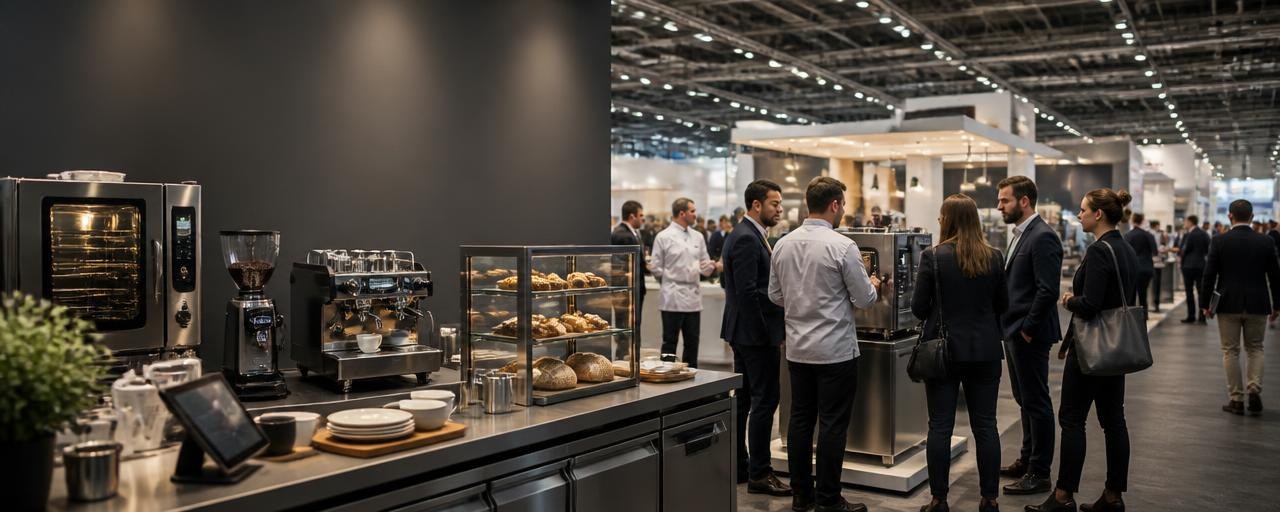
HIP, also known as Horeca Professional Expo, is a professional event for innovation in hospitality, restaurants and catering. Its official event page presents the fair alongside the Hospitality 4.0 Congress and groups its exhibition offer around design and experience, digital solutions, smart kitchens and equipment, coffee and bakery, and foodservice.
The 2027 listing confirms the dates and venue. The official page describes a three-day congress agenda with more than 30 specialised summits and over 750 experts; visitors should consult the organiser’s current programme for the session-level schedule and any later updates.
Why Madrid HIP matters to hospitality professionals
Compare operating solutions
Hospitality operators make linked decisions about equipment, service, staffing, technology and guest experience. HIP’s documented sectors bring several of those decision areas into one professional exhibition, from commercial kitchen equipment and foodservice to digital operations and hospitality design. Visitors can use that breadth to compare approaches, while checking technical details and service conditions directly with suppliers.
Connect products with business needs
A product is useful only when it fits a venue’s workflow, capacity, budget and operating model. Hotel, restaurant and catering managers can assess how equipment or digital tools might support their own requirements; procurement teams can compare specifications and ask about installation, training, maintenance, compatibility and after-sales support. These are evaluation questions for visitors to raise, not outcomes guaranteed by attendance.
Follow sector knowledge and ideas
The official page lists the Hospitality 4.0 Congress as part of HIP, with a three-day agenda, more than 30 specialised summits and over 750 experts. Its stated themes include operations, management, digitalisation, artificial intelligence, robotics, sustainability, delivery and customer experience. This gives professionals a knowledge strand alongside the product displays; confirm the current agenda and session details before planning around a particular topic.
In its 2025 annual report, IFEMA listed 577 exhibitors and 56,793 visitors for HIP. These reported figures describe the 2025 edition and provide a recent indication of the event’s scale; they are not attendance or exhibitor forecasts for 2027.
Who should visit Madrid HIP Horeca Professional Expo?
Hospitality, hotel, restaurant and catering owners and managers
Useful if you are reviewing how your business serves guests, organises operations or invests in equipment and technology. Focus on products and approaches relevant to your type of venue rather than trying to cover every sector.
- Compare equipment and service solutions against the capacity and workflow of your venue.
- Explore design and experience products with a clear view of the guest-facing change you want to make.
- Ask suppliers about implementation, maintenance, training and ongoing support.
- Record the operational problem each product is intended to solve and what evidence you need before purchasing.
The official event page identifies hospitality, restaurant and catering entrepreneurs, executives and professionals as its audience.
Food-and-beverage, kitchen, production and operations professionals
Useful if you influence kitchen performance, food production, service consistency or the selection of equipment and ingredients. Prioritise solutions by their effect on your actual process and operating constraints.
- Compare commercial kitchen equipment, coffee and bakery products, and foodservice solutions against throughput and space needs.
- Ask how equipment supports cleaning, hygiene, energy use and consistent output; verify the product-specific evidence with each supplier.
- Assess whether digital tools, robotics or AI address a defined operational task and integrate with the systems already in use.
- Capture specifications, compatibility requirements and service questions for technical review after the show.
The official event page specifically names production and operations directors, food-and-beverage professionals, kitchen professionals and executive chefs among the audiences for its smart-kitchen and equipment section.
Purchasing managers and procurement teams
Useful if you are comparing suppliers or preparing a purchase shortlist across equipment, technology, foodservice or bakery and coffee categories. Treat product claims as a starting point for due diligence.
- Set minimum requirements before comparing alternatives: capacity, dimensions, utilities, compatibility and service coverage.
- Ask for product specifications, operating requirements, warranty conditions, installation needs and references appropriate to your business.
- Separate essential requirements from optional features so that comparisons remain like-for-like.
- Record price, lead time and commercial terms only when suppliers provide them, and verify each item in a written quotation.
The event’s official exhibitor-sector descriptions include product areas intended to reach professional buyers and hospitality operators.
Hospitality technology, design and solution providers
Useful for exhibitors and business developers presenting products to professional hospitality audiences. Align the demonstration with the operational or customer-experience issue the solution addresses.
- Prepare a concise explanation of the target use case, required infrastructure and expected implementation steps.
- Bring clear technical information on interoperability, support and deployment requirements where relevant.
- Ask prospective customers about their venue type, existing systems, purchasing process and decision timeline rather than assuming fit.
- Classify follow-up discussions by the information requested and the next practical action.
HIP’s published sectors include digital solutions, design and experience, kitchen equipment, coffee and bakery, and foodservice.
What can you find at Madrid HIP Horeca Professional Expo?
Design and experience
The official exhibitor information describes furniture, ambience, tableware, interior design, decoration, textiles, lighting, lifestyle and terrace-related proposals. Buyers and specifiers can compare materials, dimensions, finishes and maintenance requirements, and consider how a product fits the venue’s concept and customer use.
Digital solutions and hospitality operations
The official page lists management software, data marketing, Internet of Things devices, digital signage, robotics, point-of-sale systems, smart kiosks and artificial-intelligence solutions. Visitors evaluating technology can ask about data handling, system integration, staff training, support, connectivity and the precise tasks the product can perform.
Smart kitchens and equipment
This sector focuses on commercial kitchen and production equipment. Relevant visitors can compare functionality, throughput, space and utility requirements, cleaning processes, safety information, maintenance arrangements and the effect on existing workflows. Confirm all technical and compliance details with the supplier before making a purchasing decision.
Coffee and bakery
The official sector description covers specialised equipment and technology, utensils, coffee, flours, doughs, yeasts, mixes, frozen and prepared products, gourmet items, packaging and decoration. Buyers can compare products for cafés, bakeries, pastry shops, ice-cream businesses, restaurants and hotels, considering storage, preparation, presentation and service needs.
Foodservice solutions
HIP describes a dedicated foodservice solutions area. Visitors can use it to explore products and services relevant to hospitality food operations, then check suitability against menu formats, service volume, kitchen capabilities and procurement requirements.
What makes Madrid HIP different?
Its value lies in the combination of hospitality products, operating technology and a sector congress. Rather than focusing on one product family alone, the published offer spans design, digital operations, kitchen equipment, coffee and bakery, and foodservice. The Hospitality 4.0 Congress adds a knowledge programme around operations, management and transformation topics.
This mix can help a visitor connect decisions that are often considered separately: for example, whether a kitchen investment fits a wider operational plan, or how a digital tool relates to staff workflow and customer experience. That is an interpretation of the published sector mix, not a guarantee that every relevant supplier or solution will be present. Check the current exhibitor information and programme to confirm specific products and sessions.
What should you try to achieve at Madrid HIP?
If you operate a hotel, restaurant or catering business
Leave with a shortlist of solutions tied to one or two defined operating priorities. Before attending, identify whether your priority is kitchen performance, guest experience, digital operations, product range or another documented event sector. For each conversation, record the need, proposed solution, implementation requirements and evidence still to collect.
If you manage kitchen, food-and-beverage or production operations
Compare alternatives against a real workflow. Take a concise description of capacity, space, utilities, cleaning and service requirements. Ask suppliers to explain how the equipment or product performs in the conditions that matter to your operation; arrange technical review before treating a demonstration as proof of suitability.
If you are a buyer or procurement professional
Build a like-for-like comparison across a focused group of suppliers. Define mandatory specifications and commercial questions in advance. Capture model, configuration, support, warranty, installation, lead time and quoted terms only when confirmed by the supplier.
If you exhibit or sell into hospitality
Qualify conversations around fit and next steps. Prepare a clear product use case, target venue profile and the technical information a buyer will need. After each discussion, record the question raised and the agreed follow-up; participation does not guarantee leads, contracts or sales.
How to prepare before Madrid HIP
1. Set a practical objective
Choose a decision you want to advance: compare kitchen equipment, review hospitality software, assess design products, identify coffee and bakery options, or follow a congress theme. Turn it into a question you can answer through supplier discussions or sessions.
2. Map the relevant sectors
Use the official event and exhibitor information to identify which published areas match your objective. Prioritise those sections, then add adjacent areas only where they connect to a real business need. Confirm the latest exhibitor directory and congress schedule with the organiser before travelling; detailed availability can change.
3. Prepare supplier questions
- Which operating need is this product designed to address?
- What capacity, dimensions, utilities or connectivity does it require?
- How does it fit with our existing equipment, software or service process?
- What cleaning, maintenance, training and after-sales support are provided?
- What certifications or product documentation apply to our intended use?
- What are the installation requirements, lead time and commercial terms?
- Can the supplier provide specifications or a written proposal for technical review?
Adapt the questions to your category: food-contact documentation may matter for relevant products, while software buyers may prioritise integration, data and support.
4. Organise meetings and sessions
If the organiser publishes a current exhibitor directory or congress schedule, use it to shortlist companies and sessions. Mark priorities as must-see, useful and optional, then leave time for follow-up conversations and unexpected comparisons. No specific app, matchmaking service or meeting-booking facility is confirmed here.
5. Prepare a comparison record
Use a simple record for each conversation: Company → product or session → business need → evidence requested → contact → next action. Keep technical claims separate from your own assessment and ask for documentation where a decision depends on them.
How to make the most of the exhibition
Start with the objective you set, not with the assumption that every stand deserves equal time. Compare similar solutions on the same criteria and note what remains uncertain. If a product is demonstrated, record the configuration shown and ask whether it matches the model and conditions relevant to your business.
For equipment, capture capacity, dimensions, utilities, hygiene and service requirements. For software and connected technology, record integrations, connectivity, data requirements, implementation and support. For design products, note materials, finishes, durability and installation. For coffee, bakery and foodservice products, compare ingredients or product specifications, storage, preparation, packaging and the intended service setting.
Use the congress themes as a filter for learning: operations, management, digitalisation, AI, robotics, sustainability, delivery and customer experience are listed on the official page. Check the detailed programme for session titles and times, then note one practical implication or question from each session you attend.
Beyond the exhibition floor
The official event page describes the Hospitality 4.0 Congress as part of HIP. It lists more than 30 specialised summits and over 750 experts for a three-day agenda, with themes including operations, management, digitalisation, artificial intelligence, robotics, sustainability, delivery and customer experience. These published programme details make the congress relevant to professionals seeking knowledge alongside product comparison.
Use the current organiser programme to confirm the session lineup, speakers and schedule before planning a visit around a particular subject. Do not assume that a topic listed for the congress guarantees a specific session or speaker at a particular time.
Networking at Madrid HIP
Make conversations useful by introducing your role, venue or business model and the operational question you are trying to solve. For a supplier discussion, explain relevant constraints such as capacity, space, existing systems or service requirements. For a buyer conversation, establish what documentation and decision steps will be needed after the event.
Before moving on, agree what information will be shared and by when, where appropriate. Record the discussion while it is fresh, with the product or session, the point of relevance and the next action. A contact is only useful when it is connected to a clear follow-up and independently assessed against your requirements.
Travelling to Madrid HIP
The confirmed venue is IFEMA MADRID, at Av. del Partenón, 5, 28042 Madrid, Spain. Consult IFEMA MADRID’s current visitor information for transport, entrances, parking and on-site arrangements, and confirm details close to the event. Specific 2027 access arrangements are not established in the event information reviewed here.
One day or several days at Madrid HIP?
The event is listed across three days and the official page describes a three-day congress agenda. A focused one-day visit may suit a visitor with a short supplier shortlist or one priority category, provided relevant meetings and sessions fit the available schedule. More time may help professionals comparing several areas—such as kitchen equipment, digital operations and foodservice—or combining exhibition visits with congress sessions. The best duration depends on the published floor plan, exhibitor list, session timetable and your own priorities; verify those details before deciding.
Who should consider exhibiting at Madrid HIP?
The published sector offer is relevant to companies working in hospitality design and experience, furniture and lighting, management and digital technology, commercial kitchen equipment, coffee and bakery, and foodservice solutions. Suppliers should define the business result they want to assess—such as explaining a product use case, learning what requirements buyers raise or evaluating distribution fit—without assuming that exhibiting will produce a particular number of leads or sales.
- Match the stand demonstration to a specific hospitality use case.
- Prepare technical, product and service information that buyers can review after the show.
- Identify which types of venue or professional role are relevant to the offer.
- Record questions about implementation, compatibility, compliance and support.
- Plan a consistent follow-up process and evaluate opportunities against commercial criteria.
IFEMA’s 2025 annual report listed 577 exhibitors for the 2025 edition. This historical figure gives context on prior scale and is not a forecast for 2027.
Madrid HIP visitor checklist
Before
- ☐ Define one or two hospitality decisions to advance.
- ☐ Review the current exhibitor information and congress programme.
- ☐ Shortlist priority suppliers, product categories and sessions.
- ☐ Prepare technical and procurement questions for each category.
- ☐ Confirm registration, opening details and travel arrangements through official information.
During
- ☐ Compare products against the same requirements and record evidence requested.
- ☐ Note operating, installation, compatibility and service conditions.
- ☐ Separate confirmed specifications from claims that require follow-up.
- ☐ Record contacts with a clear next action and timing.
After
- ☐ Sort contacts by immediate decision, further evaluation and general market learning.
- ☐ Request the product documentation, quotation or technical clarification needed.
- ☐ Compare proposals against operational fit, compliance, support and total cost.
- ☐ Share relevant congress insights with colleagues and assign practical next steps.
Is Madrid HIP Horeca Professional Expo worth visiting?
HIP is most relevant to hospitality, restaurant and catering professionals who have a defined interest in equipment, digital operations, design and experience, coffee and bakery, foodservice or the published Hospitality 4.0 Congress themes. Its range can support cross-category comparison, but the value of a visit depends on whether the current exhibitors and sessions match your needs and whether you prepare questions that lead to useful evidence. A focused plan is more practical than trying to see everything.
Madrid HIP 2027 at a glance
| Item | Information |
|---|
| Event | Madrid HIP Horeca Professional Expo |
| Official name | HIP – Horeca Professional Expo; formerly presented as Hospitality Innovation Planet |
| Date | 1–3 March 2027 |
| City and country | Madrid, Spain |
| Venue | IFEMA MADRID, Av. del Partenón, 5, 28042 Madrid |
| Industry | Hospitality, restaurants and catering |
| Published sectors | Design and experience; digital solutions; smart kitchens and equipment; coffee and bakery; foodservice |
| Congress | Hospitality 4.0 Congress; official page lists a three-day agenda, 30+ specialised summits and 750+ experts |
| Latest published scale | 2025: 577 exhibitors and 56,793 visitors, as listed in IFEMA’s annual report |
| 2027 programme | The event page describes the congress themes; consult the organiser’s current programme for session-level details |
Dates and venue are listed by IFEMA MADRID. The 2025 scale figures are historical; confirm current registration, exhibitors, sessions and access details with the organiser before planning.
Plan a purposeful Madrid HIP visit
Start with a business question, compare solutions against your operational requirements and leave with specific evidence to review. Discover. Compare. Question. Evaluate. Follow up.
Hospitality and catering opportunities in Spain
Market size and demand
Spain’s National Statistics Institute reports that tourism activity contributed €200,699 million to the economy in 2024, equal to 12.6% of GDP. The same official tourism satellite account reports 2.78 million jobs in characteristic tourism branches, or 12.3% of total employment. These are broad tourism indicators, not direct measurements of HORECA equipment purchases or demand for a particular product.
Market drivers and commercial opportunities
The scale of tourism activity provides a broad operating context for hotels, restaurants and catering businesses. Hospitality suppliers may investigate whether their equipment, foodservice, digital operations or guest-experience solutions fit the needs of those operators; buyers can compare products against venue-specific requirements. The verified data does not establish margins, unmet demand or the likely performance of any supplier.
- Kitchen and foodservice equipment: suppliers may assess fit with operator workflows and capacity needs; installation, service coverage and total cost require checking.
- Hospitality technology: providers may explore operational use cases with buyers; integration, data handling, implementation and support are important evaluation points.
- Coffee, bakery and food products: buyers may compare products for their own service formats; ingredient, storage, labelling and product-specific requirements need verification.
Regulations and market-entry conditions
For products within scope, EU Regulation (EC) No 1935/2004 establishes the framework for materials and articles intended to come into contact with food and remains in force as amended. Applicability depends on the product and materials; manufacturers, importers and distributors should assess the current requirements and any product-specific measures before placing goods on the market.
What this means for exhibitors
Hospitality suppliers could use the event to test how their products align with operator needs and identify questions about compliance, installation, integration and service. The national tourism figures provide context only; they do not guarantee demand, buyers or commercial results.
What this means for visitors
Visitors may use the exhibition to compare equipment, foodservice and technology against their own operating requirements, then request technical and compliance documentation for independent review. National tourism indicators cannot replace evidence about a specific venue, project or purchase.
For further information, please click
here .