London International Food & Drink Event (IFE) 2027
5–7 April 2027
ExCeL London, Royal Victoria Dock, London E16 1XL, United Kingdom
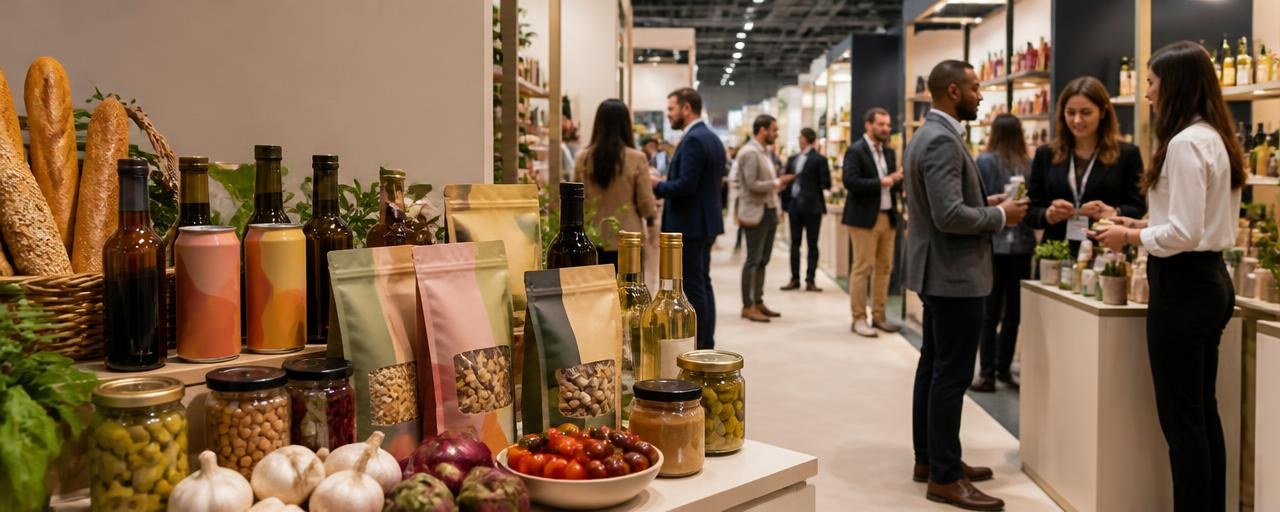
The London International Food & Drink Event (IFE) is a professional trade exhibition for food and drink brands, products and sourcing. Organised by Montgomery Group, it forms part of Food, Drink & Hospitality Week. The 2026 edition brought more than 1,500 brands to the show floor, with over 60 countries represented. That breadth makes IFE useful not just for spotting launches: buyers can compare ranges, suppliers can explore route-to-market conversations, and product teams can take a closer look at the ideas appearing across food and drink.
Why London International Food & Drink Event (IFE) matters
Discover products across several food and drink categories
IFE’s sections cover bakery and confectionery, free-from, fresh produce, grocery and wholesale, chilled and frozen food, international pavilions, drinks, and health, organic and natural products. Visitors can use this range to identify products for a particular category, customer group or channel rather than relying on a single narrow product view.
Compare products with commercial decisions in mind
Retail and wholesale buyers can assess the role a product might play in an existing range, while foodservice buyers can consider format, consistency and fit with their operation. A short list of comparison criteria—such as product format, ingredients, pack size, target customer, supply capacity and delivery conditions—helps turn browsing into a useful first evaluation. Confirm technical and commercial details directly with each supplier.
Explore international sourcing and new brands
More than 60 countries were represented by exhibitors at IFE 2026. National and regional pavilions introduced food and drink producers from Europe, the Middle East, Asia and North Africa. The 2026 show also included the Startup Market for brands trading for two years or less. These features give visitors different ways to discover products and producers, but each opportunity still needs normal checks on product fit, compliance, supply and commercial terms.
Use the latest published scale as context
- More than 1,500 brands exhibited in 2026.
- Over 60 countries were represented in 2026.
- The organiser’s 2026 visitor profile identified wholesale and distribution, foodservice and hospitality, retail, and manufacturing as major audience groups.
These are figures and descriptions for the 2026 edition, not a guarantee of the 2027 line-up or attendance.
Who should visit London International Food & Drink Event (IFE)?
IFE is most useful when you arrive with a product category, sourcing question or business objective in mind. The organiser’s 2026 audience profile described the following groups.
Retail buyers and category teams
Useful if you select products, manage categories or develop ranges for supermarket, convenience, online or independent retail.
- Compare new products against the needs of a defined category.
- Review pack formats, ingredients and customer positioning with suppliers.
- Shortlist products for further checks on price, supply, shelf life and listing requirements.
- Use product sections to focus on bakery, drinks, fresh produce, grocery, chilled and frozen, or specialist ranges.
Retail represented 24% of the organiser’s published IFE 2026 visitor profile. The figure describes that profile, not a forecast for 2027.
Wholesalers, distributors, importers and exporters
Useful if you build supplier portfolios, source products for domestic or international channels, or seek new distribution relationships.
- Identify brands that fit your channel, territory and customer base.
- Discuss product availability, export readiness, distribution arrangements and supply expectations.
- Compare similar products from different producers and markets.
- Record what needs follow-up: samples, product specifications, pricing, minimum orders and delivery terms.
Wholesale and distribution made up 36% of the organiser’s IFE 2026 visitor profile, including wholesalers, cash-and-carry operators, distributors and import/export specialists.
Foodservice and hospitality professionals
Useful if you select food or drink ranges for catering, contract foodservice, hospitality venues or related operations.
- Look for ingredients and products that fit your menu, service model and customer needs.
- Ask suppliers about format, pack size, handling and consistency.
- Compare products for operational suitability as well as taste and presentation.
- Separate items that merit a sample or kitchen trial from those needing more information first.
Foodservice and hospitality represented 29% of the organiser’s 2026 visitor profile, including procurement teams, contract caterers, chefs and hospitality operators.
Food and drink manufacturers, product developers and technical teams
Useful if you develop products, source ingredients, assess trends or work in manufacturing procurement and technical functions.
- Review ingredient and finished-product ideas that could inform development work.
- Compare suppliers and product formats before requesting technical documentation.
- Explore health, nutrition, functionality, sustainability and supply-chain themes documented in the 2026 programme and show recap.
- Capture questions for technical, quality and procurement colleagues who are not attending.
Manufacturing accounted for 10% of the organiser’s 2026 visitor profile and included NPD, technical, procurement and product-development roles.
What can you find at London International Food & Drink Event (IFE)?
The organiser describes eight event sections and pavilions. Use the product itself and your target channel to decide where to spend time.
Bakery, snacks and confectionery
Explore distinctive bakery products, snacks, confectionery and sweet treats. Buyers can compare formats and product positioning; foodservice professionals can consider use in menus and service offers.
Free-from
This pavilion is intended for free-from products. Visitors evaluating products for a particular customer need should ask suppliers about ingredients, allergen controls, product claims and the evidence that supports them.
Fresh produce
The Fresh Produce section, developed with the Fresh Produce Consortium, focuses on fresh produce. Buyers can consider range fit and ask about sourcing, quality specifications, handling and supply arrangements.
Grocery and wholesale
This section is described as covering ambient and wholesale items. It may suit buyers and distributors comparing products intended for grocery and wholesale channels.
Chilled and frozen food
Explore chilled and frozen product ranges. For any product under consideration, compare storage, handling, shelf-life and delivery requirements with your own operating conditions.
International pavilions
National and regional pavilions provide a route to products from multiple markets. The 2026 edition included government-backed delegations and producers presenting food and drink for international buyers. Treat origin and market-access questions as part of supplier evaluation.
Drinks at HRC and IFE
The drinks zone includes alcoholic and low- and no-alcohol products. Retail, distribution and hospitality teams can compare formats and use cases while checking product-specific requirements with suppliers.
Health, organic and natural
This section is for brands presenting nutritious products. Buyers can review product composition, intended customer, substantiation for claims and relevant certification or technical information before making decisions.
What makes London International Food & Drink Event (IFE) different?
IFE combines a broad food and drink sourcing floor with an international exhibitor mix and industry content.
The 2026 organiser recap recorded exhibitors from more than 60 countries, including national and regional pavilions. It also described a Startup Market for early-stage brands and a live World Food Innovation Awards programme. In 2026, more than 100 brands from 28 countries entered the awards. These are examples from the previous edition; they do not confirm that the same features, exhibitors or programme will return in 2027.
The 2026 Future Food Stage covered sustainability, supply-chain innovation, health and nutrition, and technology in food systems. The organiser’s recap also noted discussion of food-waste reduction using AI, plant-based products, retail change and dietary frameworks. Visitors interested in these subjects should review the 2027 programme when it is published and prioritise sessions that match their work.
What should you try to achieve at London International Food & Drink Event (IFE)?
Set a measurable objective before you begin. “See what is new” is too broad to guide three days of product discovery.
If you buy for retail
Objective: identify a short list of products that fit a named category and customer need. Record the product, supplier, format, differentiator and the commercial or technical information still required.
If you distribute or import
Objective: identify suppliers whose products fit your territory and channel. Establish which markets they already serve, what distribution support they can provide and which compliance or logistics details need checking.
If you buy for foodservice or hospitality
Objective: find products worth testing against a defined menu or operational requirement. Note pack size, storage, preparation needs and the sample or specification to request.
If you work in manufacturing or product development
Objective: collect product and ingredient ideas for a specific development question. Capture relevant ingredients, claims, technical contacts and evidence to review with your quality and procurement teams.
How to prepare before London International Food & Drink Event (IFE)
1. Define the decision you need to make
Choose a small number of priorities: source a product, compare suppliers, find a distributor, evaluate an ingredient, or understand a category. Tie each priority to a business requirement such as target customer, product format or supply capability.
2. Build a category-based target list
Use the official event sections to divide your targets into groups. Check the organiser’s exhibitor information and visitor tools as the 2027 edition develops. The current public site features 2026 exhibitor material, so confirm that any directory or app you use has been updated for the edition you plan to attend.
3. Rank meetings and stands
Prioritise “must meet”, “useful” and “if time allows”. Place suppliers tied to an immediate sourcing or development need first. Keep room for discovery, especially if you are exploring a category that is new to your business.
4. Prepare product-specific questions
- Which product formats and pack sizes are available?
- What ingredients, allergens and product specifications should we review?
- What are the relevant shelf-life, storage and handling conditions?
- Which certifications or substantiation support product or sustainability claims?
- What production capacity and supply continuity can the company support?
- Which countries and sales channels does the supplier currently serve?
- What are the minimum order quantity, lead time and delivery terms?
- For imported products, who will act as the UK food business operator or importer where required?
Adapt these questions to the product and your role. Do not assume every supplier or category will have the same requirements.
5. Prepare a comparison record
Use the same fields for each product: Company → Product → Why relevant → Evidence or specification to check → Contact → Next action. Consistent notes make post-show evaluation easier and reduce reliance on memory.
6. Confirm practical details
Check the organiser’s current admission, opening-time and travel information before setting your schedule. Confirm that registration and any visitor tools apply to the 2027 edition; do not rely on material labelled for 2026.
How to make the most of London International Food & Drink Event (IFE)
Start with your highest-priority product section and leave time for conversations. When a product looks promising, ask questions that help you decide whether it merits a sample, a technical review or a commercial follow-up. For a retail product, record its category, format and target shopper. For foodservice, note how it could fit an operation and what storage or preparation it requires. For distribution, record territory, channel and the supplier’s current market coverage.
Use a simple status beside each contact: A – follow up now for a clear fit and agreed next step; B – evaluate for a plausible fit that needs evidence; C – market intelligence for a useful trend or competitor reference. Ask permission before sharing or storing personal contact details and follow your organisation’s data-handling rules.
If you use the official event app or exhibitor directory, confirm it is current for 2027. Tools can help organise discovery, but they do not replace supplier checks or a written record of product specifications.
Beyond the London International Food & Drink Event (IFE) exhibition floor
IFE 2026 paired its exhibition with a Future Food Stage and the World Food Innovation Awards. The previous programme addressed sustainability, supply chains, health and nutrition, food technology, food waste and plant-based products. More than 100 brands from 28 countries entered the 2026 awards. Use these as examples of the event’s recent content, not as a promise of the 2027 schedule. The next programme and award details should be checked when the organiser publishes them.
For a session or award feature that matters to your work, note the specific idea, evidence or contact you want to follow up. Connect the insight to a decision—such as a product brief, ingredient review or supplier question—rather than collecting general trend notes.
Travelling to London International Food & Drink Event (IFE)
IFE takes place at ExCeL London, Royal Victoria Dock, 1 Western Gateway, London E16 1XL. The venue’s official event information describes Custom House as the Elizabeth line stop for ExCeL and says the journey from Liverpool Street takes about 11 minutes. It also describes a Jubilee line route via Canning Town and the DLR to the venue. Bus services and on-site parking information are listed by the organiser.
Plan your route around your first priority and check current public transport, parking and venue access information before travelling. The official site encourages visitors to use public transport and advises drivers who need parking to book in advance. Recheck arrangements for the 2027 dates, since travel information can change.
One day or several days at London International Food & Drink Event (IFE)?
One focused day
A single day may suit visitors with a defined category, a short supplier shortlist and pre-arranged priorities. Concentrate on the essential section and allow time for follow-up conversations rather than trying to cover the entire floor.
Two days
Two days may help buyers compare several product groups, revisit suppliers and include a programme session if the published schedule supports your objectives. Use the first day to discover and the second to verify and discuss shortlisted products.
All three days
Attending across the full three-day event may suit professionals covering multiple categories, conducting a broad supplier review or combining product sourcing with programme sessions. Set daily priorities so that additional time leads to better evaluation rather than simply more notes.
After London International Food & Drink Event (IFE): where the work continues
Within a few days, review your notes and divide contacts into immediate, potential and market-intelligence follow-up. For immediate prospects, send the specific request agreed at the stand. Depending on your role, this may be a product specification, ingredient or allergen information, sample, price, minimum order, lead time, certification evidence, distribution terms or a technical discussion.
Compare each product against your original brief. Retail teams may need a category and customer-fit review; distributors may assess territory, channel and supply; foodservice teams may test operational suitability; manufacturers may refer ingredient and claim information to technical or quality colleagues. Keep decisions conditional until the required evidence and commercial terms have been checked.
Who should consider exhibiting at London International Food & Drink Event (IFE)?
IFE’s sections are designed for food and drink brands and producers across bakery and confectionery, free-from, fresh produce, grocery and wholesale, chilled and frozen food, international products, drinks, and health, organic and natural categories. The 2026 edition included more than 1,500 brands and over 60 countries, while its audience profile covered retail, wholesale and distribution, foodservice and hospitality, and manufacturing.
Exhibiting may be relevant if your company wants to present products to these professional audiences, evaluate routes into the UK market or develop conversations with buyers and distributors. Before enquiring, define which category and buyer type matter, what evidence or samples you will show, and what a useful follow-up would look like. The organiser’s published visitor profile is not a guarantee of a particular buyer meeting, order or commercial result. Confirm 2027 exhibiting arrangements directly with Montgomery Group.
London International Food & Drink Event (IFE) visitor checklist
Before
- ☐ Set one to three product or sourcing objectives.
- ☐ Check which event sections match those objectives.
- ☐ Confirm the current exhibitor directory, registration and 2027 programme information.
- ☐ Rank priority suppliers and prepare product-specific questions.
- ☐ Check current travel and venue-access arrangements.
During
- ☐ Record company, product, relevance, evidence to check and next action.
- ☐ Compare products using the same criteria.
- ☐ Distinguish product claims from supporting evidence and technical documentation.
- ☐ Mark contacts for immediate follow-up, later evaluation or market intelligence.
After
- ☐ Send the information requests agreed with suppliers.
- ☐ Review samples and specifications with the relevant buying, technical or operations team.
- ☐ Compare commercial terms before progressing any product or supplier decision.
- ☐ Record useful category insights separately from purchase-ready prospects.
Is London International Food & Drink Event (IFE) worth visiting?
IFE is likely to be most useful to professionals who source, select, distribute, develop or serve food and drink products. Its multi-category sections and international exhibitor base can support product discovery and supplier comparison, while the previous edition’s content programme provides examples of wider industry discussion. The event is less likely to deliver value to a visitor without a relevant product, sourcing or learning objective. A focused shortlist, consistent evaluation notes and clear follow-up questions make a three-day trade show more manageable.
London International Food & Drink Event (IFE) 2027 at a glance
| Item | Information |
|---|
| Event | London International Food & Drink Event (IFE) |
| Dates | 5–7 April 2027 |
| City and country | London, United Kingdom |
| Venue | ExCeL London, Royal Victoria Dock, 1 Western Gateway, London E16 1XL |
| Organiser | Montgomery Group |
| Main industries | Food and drink, including bakery and confectionery, fresh produce, grocery, chilled and frozen food, beverages, free-from, health, organic and natural products |
| Main audiences | Retail buyers; wholesalers, distributors, importers and exporters; foodservice and hospitality professionals; manufacturers and product-development teams |
| Latest published scale | More than 1,500 brands and over 60 countries represented in 2026 |
| 2027 programme | Not confirmed in the official pages reviewed; check the organiser’s updated programme information |
The official event site confirms the 2027 dates and venue. The published scale and programme examples above refer to the 2026 edition.
Make your London International Food & Drink Event (IFE) visit count
Before you go, ask: Which product, supplier or market question do I want to resolve, and what evidence will help me decide? Use IFE to discover and compare, then follow up with the information your business needs. Define your brief. Compare carefully. Follow up with purpose.
Food and drink opportunities in the United Kingdom
Market size and demand
In 2025, the United Kingdom imported £67.8 billion of food, feed and drink, while exports were valued at £25.7 billion, according to Defra’s official trade statistics published in October 2026. These are broad food, feed and drink totals, not figures for any single product category or a measure of profitability. They show the scale of cross-border trade that food and drink suppliers, buyers and distributors may want to understand.
Market drivers and commercial opportunities
Defra’s 2025 trade tables show different movements across product groups: beverage exports were valued at £8.192 billion; dairy and eggs exports rose 16% in current prices from 2024; and coffee, tea, cocoa and spices exports rose 15%. Those figures describe exports, not domestic demand. IFE’s 2026 recap also reported exhibitor activity in functional beverages, high-protein and reduced-sugar snacks, free-from products, premium ingredients and international flavours. Together, these sources can help businesses choose which categories to investigate, but they do not establish easy market entry or future demand.
- Assess products for UK distribution: overseas brands and UK importers may use the event to investigate products and channel fit against the substantial national food, feed and drink import market. Product-level import demand and competition should be checked separately.
- Evaluate export-ready ranges: UK producers may explore buyers and distributors for products in categories with recorded exports, while assessing destination-market requirements and commercial terms.
- Review beverage and speciality categories: suppliers and buyers may use trade figures and IFE’s recent product mix to identify questions for deeper market research; the broad figures do not prove a growth opportunity for a particular brand.
Regulations and market-entry conditions
UK government guidance states that pre-packed food sold in Great Britain must meet mandatory food-information and labelling requirements, including ingredient, allergen and other product information where applicable. Since 1 January 2024, pre-packaged food sold in Great Britain must include a UK address for the food business operator; if that operator is not in the UK, the importer’s UK address must be included. These requirements are in force. Businesses should check the rules that apply to their product and role, including any product-specific requirements, before offering goods for sale.
What this means for exhibitors
Food and drink brands considering UK buyers may use IFE to test product and channel fit, identify possible importer or distributor conversations and establish which technical details buyers need. Exporters should prepare accurate ingredient, allergen, origin, labelling and supply information for review. A conversation at the show does not guarantee a listing, order or distribution agreement.
What this means for visitors
Buyers, importers and distributors may use the product sections to compare domestic and international options, then check specifications, UK food-information requirements, supply capability and commercial terms. The trade totals provide market context only; product-level decisions require more specific evidence about the category, supplier and route to market.
For further information, please click
here .