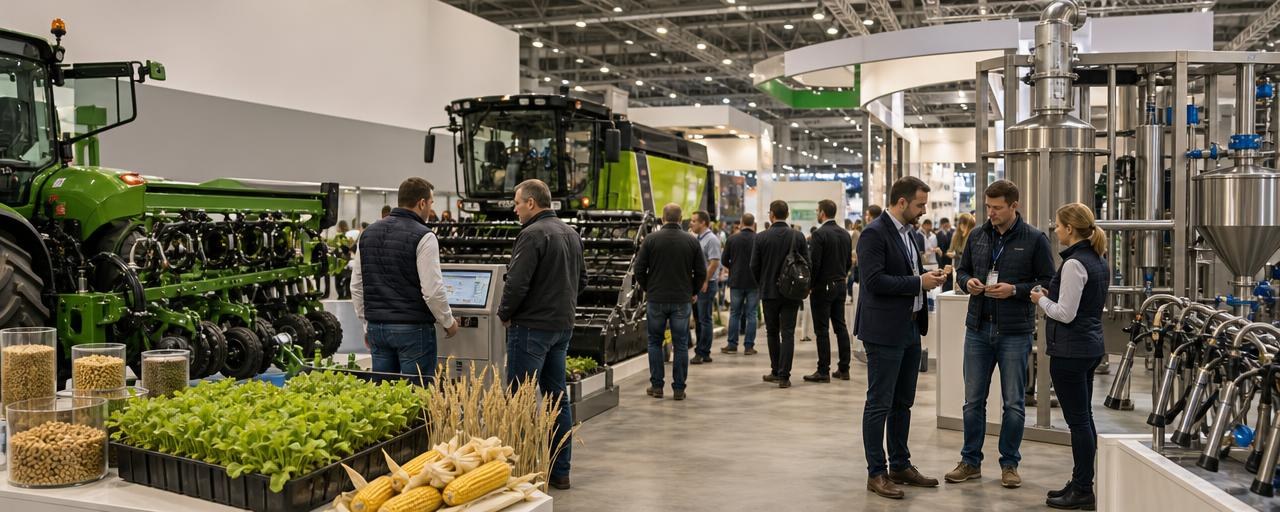
AGRAVIA 2027
AGRAVIA is an international trade fair for the agro-industrial sector, bringing crop production, livestock and poultry, horticulture, agricultural machinery, feed and animal health, and agricultural processing into one professional exhibition. Its 2027 edition takes place 20–22 January 2027 at Crocus Expo, Pavilion 3, Moscow, Russia. The exhibition is organised by Agros Expo Group LLC. AGRAVIA is the current name of an exhibition project previously known through AGROS and AGROTECH; the organiser says the AGRAVIA brand marks a new chapter in that history.
The event is relevant to more than machinery buyers. Farm operators, crop and livestock specialists, distributors, processors and technology suppliers can use its connected sector structure to compare equipment and inputs, review technical approaches, meet commercial counterparts and investigate how products may fit their own operations. Processing runs across the crop and animal-production sections rather than appearing as a single isolated theme.
AGRAVIA 2027 at a glance
| Item | Information |
|---|
| Event | AGRAVIA |
| Full name | International trade fair for production and processing technologies in agriculture, horticulture, livestock and poultry |
| Edition | 2027; ordinal edition number not stated |
| Event type | Business trade fair |
| Category | Agriculture, Forestry & Fisheries |
| Dates | 20–22 January 2027 |
| Opening hours | 20 and 21 January, 09:00–18:00; 22 January, 09:00–16:00 |
| City and country | Moscow, Russia; venue municipality: Krasnogorsk |
| Venue | Crocus Expo, Pavilion 3, 20 Mezhdunarodnaya Street, Krasnogorsk, Moscow Region |
| Organiser | Agros Expo Group LLC |
| Main sectors | Field crops, crop inputs and machinery; livestock and poultry; feed and animal health; horticulture and nursery production; agricultural and food processing |
| Latest published scale | 2026 organiser figures: 953 exhibitors, 27,215 professional visitors and 57,200 m² of exhibition area |
The dates, venue and visitor hours are published for 2027. The scale figures refer to the previous edition and are organiser-reported, not 2027 results.
Why AGRAVIA matters to agribusiness
See connected parts of the production chain
AGRAVIA groups crop production, livestock and poultry, horticulture, feed and animal health, and processing solutions within one trade-fair framework. Visitors can connect decisions often considered separately: machinery with seed and crop protection, animal housing with feeding and veterinary systems, and primary production with storage, logistics and processing.
Compare products against operating requirements
Side-by-side displays can help buyers form a shortlist and ask about capacity, compatibility, maintenance, consumables, installation and after-sales support. These questions matter when a purchase affects an entire production cycle or a multi-year investment plan.
Connect technical knowledge with commercial decisions
The organiser’s business programme and specialist meeting formats combine industry discussion with practical cases and opportunities to meet specialists. Visitors can use these settings to test assumptions and identify what requires separate technical or commercial review.
Latest published scale
- 953 exhibitors in 2026, organiser-reported.
- 27,215 professional visitors in 2026, organiser-reported.
- 57,200 m² of exhibition area in 2026, organiser-reported.
- The organiser reports exhibitors from 32 countries and visitors from 58 countries and 89 Russian regions in 2026.
- The organiser reports that 99% of visitors were industry professionals and 84% made or influenced investment decisions in 2026.
This reported scale suggests a substantial, multi-sector environment where a prepared shortlist and a realistic route through priority halls are more useful than trying to see everything.
Exhibition sectors and product groups at AGRAVIA
Field crops, seeds and crop protection
This area links crop production with materials and equipment needed through planting, cultivation and harvest.
- Agricultural tractors, field machinery and implements
- Seed breeding, seed production and planting materials
- Crop protection products and fertilisers
- Seeding, cultivation and crop-care equipment
- Spare parts, consumables, fuels and lubricants
Potato, fruit, vegetable and protected cultivation
- Potato production and handling solutions
- Open-field vegetable, fruit and berry production
- Greenhouse technologies and planting materials
- Nursery production and garden-centre equipment
- Urban greening, landscaping and public-space technologies
Livestock, poultry and animal-production systems
- Breeding and genetics
- Housing, feeding and livestock-facility construction
- Milking and milk-cooling equipment
- Poultry production and facility equipment
- Forage harvesting, waste management and animal-protein processing equipment
Feed, veterinary and animal health
- Animal feeds, feed ingredients and feed additives
- Premixes and feeding-ration solutions
- Feed milling and processing equipment
- Veterinary medicines, vaccines, instruments and equipment
- Disinfection and pest-control equipment and products
Agricultural and food processing
Processing is described as a cross-cutting theme integrated into sections related to the products being produced.
- Equipment for processing products of plant origin
- Equipment for processing products of animal origin
- Post-harvest handling and storage systems
- Logistics and supply solutions
- Agricultural facility construction and processing infrastructure
Who should visit AGRAVIA?
Farm owners, agricultural holdings and production managers
Useful if you are responsible for crop, livestock or poultry operations and need to evaluate practical improvements.
- Compare machinery against crop, soil and capacity requirements
- Review seed, crop-protection and fertiliser options alongside equipment
- Assess feeding, housing, milking, cooling or ventilation systems
- Ask about service, spare parts, consumables and maintenance
- Investigate storage, logistics and processing solutions linked to production
Bring operating specifications and constraints such as throughput, compatibility, service access and total cost of use.
Agricultural machinery, input and animal-health buyers
Useful if you source products for farms or manage a dealer portfolio.
- Compare technical specifications across suppliers
- Check product ranges, parts arrangements and service coverage
- Assess crop and horticulture inputs against customer needs
- Review feed, veterinary and animal-health product groups
- Identify lines that complement an existing portfolio
Separate products worth a technical review from those that are simply new to the market.
Manufacturers, distributors and service companies
Useful if you present equipment, inputs, technology or services to agricultural professionals.
- Explain which farm type, production scale or crop system your solution serves
- Show how equipment connects with complementary machinery or consumables
- Discuss distributor capability, support expectations and spare-parts needs
- Compare approaches and clarify product differentiation
- Explore whether adaptation or service partnerships require further investigation
Plan follow-up carefully; an introductory discussion is not a confirmed order or partnership.
Processors, horticulture businesses and technical specialists
Useful if your work connects primary production to post-harvest handling, protected cultivation, nursery operations or processing.
- Compare technologies for handling products after harvest
- Review greenhouse, nursery and ornamental-horticulture equipment
- Evaluate processing equipment against product and throughput needs
- Discuss facility, logistics and supply requirements
- Use business sessions to examine operating cases and sector questions
Translate projects into measurable questions about product quality, capacity, labour, energy, integration and commissioning.
Relevant job roles
Farm owners and directors, general managers, agronomists, crop and livestock production managers, poultry specialists, procurement managers, machinery dealers, feed and animal-health specialists, processing managers, horticulture operators, engineers, researchers and agricultural advisers.
Why visit AGRAVIA?
- Shortlist equipment for a production need. Compare tractors, harvesting equipment, implements and crop-care systems against the capacity and conditions of your operation.
- Evaluate input combinations. Review seed, planting material, crop protection and fertiliser offerings in context.
- Compare livestock and poultry systems. Ask about housing, feeding, milking, cooling, veterinary and facility solutions as connected choices.
- Trace products beyond primary production. Examine post-harvest handling, storage, logistics and processing technologies for a project.
- Assess suppliers and support. Discuss specifications, spare parts, consumables, maintenance and technical support.
- Use professional programme formats. Select confirmed sessions, consultations or specialist areas relevant to your decisions.
- Investigate business fit. Use the exhibition and confirmed international visitor initiatives to identify questions for further due diligence.
Why exhibit at AGRAVIA?
AGRAVIA is relevant to manufacturers and suppliers whose products map to crop production, machinery, horticulture, livestock and poultry, feed and animal health, or agricultural processing. The 2026 organiser figures provide a recent reference for scale, not a guarantee of the 2027 audience or results.
Exhibitors can present products, explain specifications, meet customers, introduce a range, compare market feedback and investigate distributor or service relationships. A useful plan identifies target buyers, technical documents, products to feature and follow-up actions.
Market-entry note: Companies should check current product-specific import, conformity, registration, service and localisation requirements with qualified advisers before committing. Available market evidence does not establish a current rule for every category.
Exhibitor preparation points
- Describe the farm type, production system and capacity each product serves.
- Prepare specifications, compatibility information and service requirements.
- Clarify spare parts, maintenance and training needs.
- For inputs, prepare product-use information and applicable technical documentation.
- Define the distributor, service partner or customer conversation you want to explore.
- Confirm stand options, terms and deadlines directly with the organiser.
What makes AGRAVIA different?
Its defining feature is broad agro-industrial coverage, with production and processing themes linked across the exhibition.
The 2027 sector description combines field crops, potato and horticulture, livestock and poultry, feed and animal health, and agricultural processing. Published special formats include the House of Potato, Agrocampus: Career & Education Hub, a Competence Center and an International Visitors’ Lounge. The organiser describes the Competence Center as a scheduled-meetings area connecting industry bodies and specialists with visitors seeking agribusiness consultations.
The organiser’s 2026 materials describe international meeting initiatives and state that these projects will continue in 2027 with wider representation. Check the detailed schedule when it is published.
What should you try to achieve at AGRAVIA?
Replace the broad goal “see what is new” with an outcome you can act on after the exhibition.
If you manage a farm or production business
Leave with a shortlist of machinery or inputs that meet a defined operational requirement. Record capacity, compatibility, service arrangements and the next technical question.
If you buy or distribute agricultural products
Identify product lines that fit your customers and service capabilities. Note target users, support obligations and evidence needed for commercial review.
If you manufacture or exhibit
Qualify conversations that merit follow-up. Record the company’s production context, decision process, product interest and agreed next step.
If you work in processing or horticulture
Map one project from production through handling or processing. List interfaces, site requirements and performance measures for suppliers to address.
How to prepare before AGRAVIA
1. Define your decision
Write down the business question that justifies your visit: replacing equipment, comparing suppliers, assessing an input, planning processing, building a dealer portfolio or understanding a production challenge.
2. Build a supplier shortlist
Use the organiser’s exhibitor catalogue when its 2027 entries are available. Prioritise companies by fit, and note the product category, issue to solve and evidence you want to collect.
3. Prepare technical questions
- What capacities, crop types, field conditions or livestock systems does the solution support?
- Which machines, inputs or systems must it integrate with?
- What service intervals, consumables and spare parts are required?
- What installation, commissioning, training or facility changes are needed?
- How do performance claims vary by crop, soil or production scale?
- What maintenance, repair and warranty arrangements apply?
- For feed and animal-health solutions, what farm or species conditions apply?
- For processing equipment, what throughput and upstream supply assumptions should be tested?
4. Prioritise meetings
Classify target companies as A — essential, B — useful and C — explore if time allows. Plan around relevant sections and appointments rather than assuming every stand can be visited. Confirm any scheduled-meeting format with the organiser.
5. Prepare a comparison record
For each discussion, capture Company → Product → Operating fit → Specification or evidence → Service needs → Contact → Next action.
How to make the most of the exhibition
Use the floor plan and section structure to follow your priorities. Group crop and horticulture visits if your decisions concern planting or crop care; reserve time for livestock, poultry, feed and animal health if they are part of the same plan. Processing is integrated into related production sections, so follow those connections.
Ask what problem a product solves, what evidence supports its performance, what it requires to operate, which complementary systems are needed and how maintenance is handled. Request documentation for claims that matter to a purchase, then arrange a technical review with your team.
Keep an end-of-day list of open questions and follow-ups. Where business matching or scheduled consultation is operating, check current arrangements and use it for a defined discussion.
Plan your time realistically
The 2026 exhibition covered 57,200 m² according to organiser figures; the 2027 venue information shows a floor plan across two levels. Plan around your target sections and meetings.
- Before opening: review target suppliers, the hall plan and confirmed programme.
- First block: focus on essential product comparisons and technical discussions.
- Midday: use a planned meeting or consultation, then review notes.
- Second block: cover connected areas such as processing, storage, feed or horticulture.
- End of day: assign follow-up owners and note missing specifications.
On 22 January the published visitor hours end at 16:00, earlier than the first two days; schedule final meetings accordingly.
Beyond the AGRAVIA exhibition floor
The organiser’s 2026 material describes a business programme focused on sector analysis, international cooperation, practical cases and professional discussion. It also highlights the House of Potato, Agrocampus: Career & Education Hub, a Competence Center for scheduled consultations, an International Visitors’ Lounge, Embassy Hour and business matching.
These are examples from the previous programme, not a promise that every session will repeat unchanged. The organiser states that international projects will continue in 2027 with wider representation; check the confirmed schedule and participation arrangements.
Networking at AGRAVIA
Prepare a concise introduction explaining what you produce, buy or distribute, which crop, livestock, poultry or processing context you serve, and what next step would be useful.
- Buyers: state the operating requirement and decision timetable.
- Distributors: describe your customer base, service coverage and product categories.
- Manufacturers: explain intended applications, technical support and partner profile.
- Processors: outline product, throughput, quality and integration requirements.
Agree what information should be exchanged next. Record context rather than collecting contacts without a clear purpose.
AGRAVIA visitor profile and business interests
| Visitor profile | Potential focus |
|---|
| Farm owners and production managers | Machinery, inputs, livestock systems, operating fit and service |
| Agronomists and crop specialists | Seeds, crop protection, fertilisers, field equipment and handling |
| Livestock and poultry managers | Housing, feeding, milking, cooling, veterinary and facility systems |
| Machinery dealers and distributors | Product range, parts, service obligations and portfolio fit |
| Feed and animal-health professionals | Feed ingredients, additives, milling equipment and veterinary products |
| Horticulture and nursery businesses | Greenhouse systems, planting materials and nursery equipment |
| Processors and engineers | Handling, storage, logistics, processing and facility integration |
| Researchers, advisers and educators | Industry cases, technical discussion and knowledge exchange |
Travelling to AGRAVIA
The official venue directions identify Crocus Expo, Pavilion 3, at 20 Mezhdunarodnaya Street, Krasnogorsk, Moscow Region. The event is marketed as a Moscow exhibition; the physical venue is in Krasnogorsk. The organiser names Myakinino station on the Arbatsko-Pokrovskaya (blue) metro line. Its directions also describe road approaches from both sides of the Moscow Ring Road via the Crocus City exit after Volokolamskoye Highway.
Use current venue directions to plan the route, allow time to locate Pavilion 3 and check access arrangements before travel. The floor plan covers two levels; identify sections and meeting points in advance.
Practical information for international visitors
| Item | Verified information |
|---|
| Venue | Crocus Expo, Pavilion 3, 20 Mezhdunarodnaya Street, Krasnogorsk, Moscow Region |
| Public transport | Myakinino station, Arbatsko-Pokrovskaya (blue) metro line |
| Road access | Official directions describe approaches from both sides of the Moscow Ring Road via the Crocus City exit |
| International programme formats | The organiser describes an International Visitors’ Lounge and international meeting initiatives in 2026, with projects stated to continue in 2027 |
Check current travel, entry, registration and payment requirements for your circumstances before departure. Transport and programme details can change.
One day or several days at AGRAVIA?
One day
A focused day can work if you have a short list of suppliers in one or two connected sectors and meetings arranged in advance.
Two days
Consider two days when your work spans crop and animal production, or when machinery, inputs and processing need to be evaluated together.
Three days
The full event may suit visitors with several sector responsibilities or a combination of exhibition and business-programme objectives. Account for the earlier closing time on the final day.
After AGRAVIA: where the value continues
Organise notes by decision rather than by stand visited.
- Priority A — decision-ready: request missing specifications, service information, product documentation or terms needed for an internal review.
- Priority B — potential fit: arrange a technical discussion or distributor conversation if initial evidence matches requirements.
- Priority C — market intelligence: retain useful product observations without displacing a defined project.
For machinery, compare capacity, compatibility, service and parts. For crop inputs, organise information by crop and intended use. For animal systems, document facility assumptions. For processing, confirm throughput, product characteristics and integration points. Assign an owner to each follow-up.
AGRAVIA visitor checklist
Before
- ☐ Set a sourcing, investment, distribution or learning objective.
- ☐ Review the exhibitor catalogue, confirmed programme and floor plan.
- ☐ Prepare technical questions and a comparison record.
- ☐ Arrange priority meetings and confirm registration and travel details.
- ☐ Bring specifications relevant to crop, livestock, horticulture or processing needs.
During
- ☐ Prioritise suppliers and sections tied to your objective.
- ☐ Record product fit, evidence, service needs and next action.
- ☐ Check which programme or meeting formats are confirmed.
- ☐ Review notes daily and identify missing information.
After
- ☐ Send focused follow-up questions to priority contacts.
- ☐ Compare specifications and service arrangements consistently.
- ☐ Share findings with technical, procurement and operations colleagues.
- ☐ Decide which options merit further evaluation.
Is AGRAVIA worth visiting?
AGRAVIA is most useful for professionals connected to crop production, horticulture, livestock and poultry, feed and animal health, agricultural machinery or processing. Its breadth can help visitors examine connected decisions and compare suppliers, while specialist areas and the business programme add routes into technical and commercial discussion. Value depends on matching the exhibition’s scale to a prepared shortlist, asking evidence-based questions and following up. A broad walk through the halls without a decision objective is less likely to produce useful outcomes.
Make your AGRAVIA visit purposeful
What do you need to compare, source or decide that you cannot resolve from a product catalogue alone? Use the exhibition to discover, compare, meet, decide and follow up.
Agricultural machinery opportunities in Russia
Market size and demand
Rosspetsmash, the Russian Association of Manufacturers of Specialised Machinery and Equipment, reported that domestic shipments of Russian-made agricultural machinery fell 17% year on year to RUB 182.9 billion in January–November 2024. This measures domestic shipments of Russian-made machinery, not total market size. The association also reported a 12% decrease in production of machinery meeting Resolution No. 719 requirements, to RUB 221.9 billion over the same period.
- Domestic shipments of Russian-made agricultural machinery: RUB 182.9 billion, January–November 2024, down 17% year on year; Rosspetsmash association data.
- Production of machinery meeting Resolution No. 719 requirements: RUB 221.9 billion, January–November 2024, down 12% year on year.
- Selected product shipments: balers rose 34.3% to 1,170 units, headers 5.2% to 2,170 units and mowers 5% to 2,350 units in January–November 2024. These are product indicators, not market-wide growth.
Market conditions and areas to investigate
The association cited high interest rates, low agricultural profitability, constrained support funding and rising production costs among reasons for weaker shipments. Its figures point to a difficult and uneven equipment environment rather than a uniformly expanding market.
- Product-specific comparison: buyers may compare domestic and international machinery options and investigate equipment for their farms; financing, compatibility and service remain important constraints.
- Categories with differing trends: balers, headers and mowers had positive shipment movements while several other categories declined in the association’s 2024 data. Buyers and suppliers can use this contrast to frame questions, not to assume future demand.
- Service and parts evaluation: machinery buyers may compare support and maintenance arrangements where equipment decisions are exposed to financing or operating-cost pressure.
Market-entry conditions
Current import, conformity-assessment, registration and localisation requirements vary by product and were not established here. Verify the rules and any current programme conditions for the exact product and business model before committing to sales, distribution or local production.
What this may mean for exhibitors
Machinery and input suppliers may use AGRAVIA to test product fit, compare service expectations and identify questions for prospective distributors or technical partners. Reported shipment contraction makes careful qualification of demand, financing and local support important; the event does not guarantee buyers or sales.
What this may mean for visitors
Farmers, dealers and production managers may benefit from comparing performance, service commitments and ownership requirements. The association’s mixed category figures can frame questions about differing supply conditions, while current market-access and product-compliance details need separate verification.
Explore Event Opportunities
Explore how AGRAVIA may support your sourcing, supplier evaluation, market research or exhibition-participation priorities, with practical assistance from ilikevents.
Get Expert Assistance from ilikevents to plan your visit or exhibitor participation.
See the ilikevents services for this event
For further information, please click
here .