The London Coffee Festival 2027: from origin to the cup
The London Coffee Festival is a coffee and hospitality festival combining dedicated industry days with a consumer weekend. The 2027 edition is scheduled for 13–16 May 2027 at The Truman Brewery, London, England. It is organised by William Reed Ltd. The current programme brings together coffee brands, professional suppliers, practical demonstrations, education and public experiences.
The event is useful as both a marketplace to explore and a place to understand coffee more deeply. The new Green Room focuses on coffee’s journey from seed to cup, connecting origin, sourcing, green coffee, roasting and quality with the people and businesses involved in the supply chain.
Why London Coffee Festival matters
Follow coffee from origin to sourcing
The Green Room is a new 2027 area for producing countries, producer groups, importers, exporters, green coffee traders, roasters and sustainability organisations. Its focus on origin representation and sourcing gives professionals a way to investigate relationships and product stories before coffee reaches the roastery or café.
See skills and equipment in use
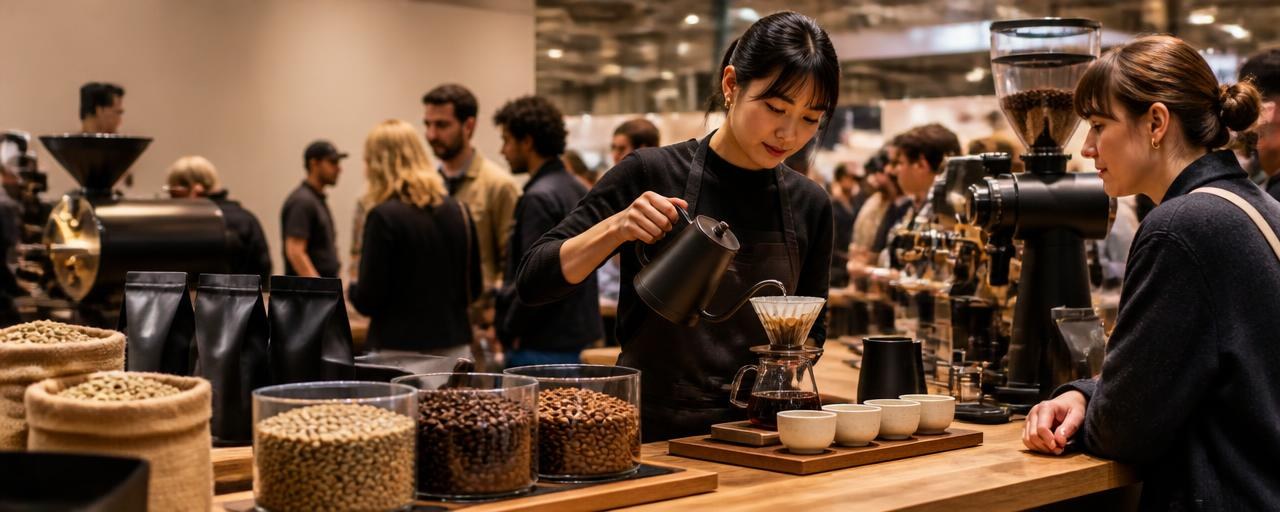
Roasting demonstrations, filter-brewing features, guided cuppings and sensory sessions put techniques into practice. Instead of considering equipment or coffee only as a catalogue item, visitors can watch preparation, taste results and ask more precise questions about how a method or product might suit their work.
Move between trade and consumer perspectives
The festival has two dedicated industry days and a consumer weekend. That format brings coffee professionals together with enthusiasts, while allowing visitors to choose the days that fit their reason for attending. The organiser describes the event as spanning the wider coffee and hospitality ecosystem, from independent roasters and start-ups to global brands.
Who should visit London Coffee Festival?
The event serves different goals across the coffee community. Before attending, check the organiser’s latest schedule and visitor information so you can select the most relevant sessions and days.
Café owners, baristas and hospitality teams
Useful if you want to refine what you serve, compare preparation approaches or explore equipment for a hospitality business. Prioritise:
- Brewing and espresso equipment that fits your service style
- Filter coffee methods, grinders and practical accessories
- Roasters and coffee brands whose range suits your menu
- Milk, food and other coffee-adjacent products relevant to your offer
- Demonstrations and education that help you assess technique and quality
The organiser identifies hospitality professionals as a core audience and lists two dedicated industry days.
Roasters, green coffee buyers and supply-chain businesses
Useful if your work involves sourcing, importing, exporting, roasting or communicating coffee origin and quality. Focus on:
- Green coffee traders, producer groups and origin organisations
- Origin representation and sourcing stories in the Green Room
- Roasting equipment, technology and techniques
- Potential supply-chain partners and the information needed to assess fit
- Cupping and sensory sessions that help compare coffees and flavour profiles
The 2027 Green Room is expressly designed to bring together producers, traders, importers, exporters, roasters and sustainability organisations.
Coffee enthusiasts and home brewers
Useful if you want to taste coffees, improve your home brewing or understand how origin and preparation affect flavour. Look for:
- Guided tastings and cuppings
- Filter brewing demonstrations and different brewing kits
- Roasting demonstrations and explanations of the process
- Workshops and education sessions on coffee-industry topics
- Opportunities to speak with the people behind the coffee and equipment
The event combines an industry programme with a consumer weekend and lists tastings, workshops and demonstrations among its experiences.
What can you find at London Coffee Festival?
Green coffee, origins and sourcing
The Green Room creates a dedicated place for green coffee and coffee’s origin story. The organiser says it will bring together producing countries, producer groups, importers, exporters, traders, roasters and sustainability organisations. Visitors can explore different sourcing perspectives and learn more about the people and partnerships behind coffee production.
Roasting and roasting technology
The announced roasting experience includes live roasting, a look at roasting equipment and opportunities to meet roasters. For a roastery or café, compare the workflow, operating needs and results that matter to your own business rather than assuming that a demonstration setup will match your production environment.
Filter coffee and brewing equipment
Drip District is dedicated to filter coffee, with brewers, techniques, kit and tasting. The organiser describes it as a place to explore how brewing choices affect the cup. Use demonstrations to compare practical details such as workflow, repeatability, cleaning and the level of control available.
Cupping and sensory evaluation
The Cupping Room is planned to host guided cuppings and sensory sessions exploring coffees, origins and flavour profiles. These sessions can help both newcomers and experienced professionals practise a shared vocabulary for describing and assessing coffee.
Brands, hospitality and wider festival experiences
The festival’s wider programme includes Coffee Masters, Latte Art Live, The Roasters Village, Brew School, The Lab and a Demo Bar, alongside coffee and food brands and hospitality suppliers. Specific session times and participation details should be checked in the current organiser information as the 2027 programme develops.
What makes London Coffee Festival different?
Its 2027 Green Room gives the event a more explicit seed-to-cup and sourcing dimension alongside its established brewing and tasting experiences.
The Green Room was announced in response to requests for more green coffee, origin representation and connections across the coffee supply chain. Its planned mix of producer groups, origin organisations, traders, importers, exporters, roasters and sustainability organisations brings several stages of the value chain into one area. The event also links hands-on learning with tasting: roasting demonstrations, filter brewing, cupping and sensory sessions let visitors observe and experience coffee rather than only read about it.
The format also spans professional and public participation. Industry attendees have two dedicated days, while the weekend is positioned for consumers. That makes the event relevant to supplier discovery and industry learning as well as to people exploring coffee as a craft and culture.
What should you try to achieve at London Coffee Festival?
If you buy or manage a café
Choose a short list of coffees, brewing tools or equipment options to investigate for one defined service need. For each option, note the product, the audience it could serve, the workflow it requires and the questions you still need answered.
If you source or roast coffee
Identify a small set of origin, green-coffee or roasting contacts for a specific sourcing question. Record the origin or product, available quality information, continuity and volume questions, and what documentation you need to review after the event.
If you attend as an enthusiast
Compare a few coffees or brewing methods with a clear tasting question in mind. Note the coffee, origin information provided, roast style, method and flavours you notice. This gives demonstrations and tastings a practical thread rather than turning the visit into a series of unrelated samples.
How to prepare before London Coffee Festival
1. Choose the right reason and day
Decide whether your priority is trade and sourcing, café operations, equipment, learning or tasting. The event has two dedicated industry days and a consumer weekend; confirm the 2027 day-by-day access arrangements before making plans.
2. Build a focused target list
Use the organiser’s current exhibitor and programme information when it is available. Select a manageable set of roasters, green coffee businesses, equipment suppliers or sessions. If a detailed directory or timetable has not yet been released, revisit the official information rather than relying on old-edition listings.
3. Prepare questions for suppliers
For green coffee, ask about origin, lot details, processing, harvest and availability information, sample options, consistency and the documentation available for follow-up. For roasting equipment, ask about batch size, control, energy needs, maintenance and service. For espresso or filter equipment, ask about workflow, throughput, cleaning, training and support. For café products, clarify pack sizes, delivery, storage and wholesale terms directly with the supplier.
4. Set a comparison method
Use the same notes for each relevant product: Company → Product → Why it fits → Questions → Next action. This makes it easier to distinguish a promising conversation from a product that still needs technical, commercial or compliance checks.
5. Plan around practical constraints
Check the event’s current registration, access and schedule details before travelling. Set a realistic budget for transport, attendance and any purchases, and decide in advance how much time to reserve for demonstrations, meetings and follow-up notes.
How to make the most of the festival
Give each stop a purpose. At a tasting, record the coffee and the organiser’s or presenter’s description before adding your own observations. At a brewing or roasting demonstration, note the equipment, method and result. At a supplier conversation, write down what the company can confirm and what remains to be checked.
Keep a compact record such as:
- Company or session: who you spoke with or what you attended
- Product or method: coffee, equipment, roasting approach or brewing technique
- Relevance: the business or learning question it addresses
- Evidence to collect: product details, samples, specifications or contact information
- Next action: a follow-up question, comparison or trial
For busy demonstrations, focus on the question you came to answer and make room for others to participate. Confirm any tasting, workshop or competition access requirements in the organiser’s current guidance.
Plan your time at London Coffee Festival
The festival runs across four calendar days, with two dedicated industry days and a weekend for consumers. The detailed 2027 timetable and access arrangements should be checked as they are published.
Industry-day approach
Reserve time for priority supplier conversations, the Green Room and the practical sessions most relevant to your business. Add a buffer between demonstrations and meetings so you can take notes and avoid committing to a conversation you cannot finish.
Consumer-weekend approach
Choose a few tastings, workshops or demonstrations as anchors, then leave time to explore coffee brands and brewing experiences. If you are learning a new method, compare one or two variables at a time rather than trying to evaluate everything in a single visit.
At the end of each day
Review your notes while conversations are fresh. Mark which coffees, tools or contacts need a second look, and separate confirmed product information from questions that still need an answer.
Beyond the coffee counter
The 2027 programme expands the festival with The Green Room, which is planned to include roasting, Drip District filter coffee and the Cupping Room’s guided tasting and sensory sessions. The wider festival also lists Coffee Masters, Latte Art Live, The Roasters Village, Brew School, The Lab and a Demo Bar. These are programme features announced by the organiser; check the current schedule for confirmed timings, access and session details.
For visitors, these formats serve different purposes: competitions offer a view of professional skill, demonstrations show methods in action, and tastings support sensory comparison. Choose the activities that answer your own learning or business question.
Networking at London Coffee Festival
A useful conversation starts with a clear introduction: what part of the coffee business you work in, what products or origins interest you, and what question you are trying to solve. For sourcing discussions, be ready to explain the kind of coffee, volume, timing and information you need. For equipment conversations, describe the drinks, service pace and operating conditions you need the equipment to support.
After a promising discussion, agree on a specific next step rather than relying on a general promise to stay in touch. Note whether you need a sample, specification, wholesale details, service information or a follow-up meeting, and record who will provide it.
Travelling to London Coffee Festival
The venue is The Truman Brewery, F Block G1, Ely’s Yard, London E1 6QR. The organiser lists Shoreditch High Street station as a five-minute walk and Aldgate East station as a ten-minute walk. Liverpool Street station is listed at a ten-minute walk, with Underground and National Rail services. Old Street station is listed at a fifteen-minute walk. Bus routes are also listed by the organiser. Check current transport and venue access information before travelling.
Where should you stay?
Choose accommodation around the purpose and length of your visit. If your schedule is focused on the festival, prioritise a straightforward route to the venue and enough time for the sessions you have selected. If you are arranging additional business meetings, compare the locations of those appointments with your event-day plans. Confirm travel times and cancellation terms directly before booking; no specific hotel or rate is endorsed here.
One day or several days at London Coffee Festival?
There are four event days, with two dedicated to industry and the weekend framed for consumers. Whether to attend once or across multiple days depends on what you need to accomplish.
- One day: suitable when you have a narrow goal, a short supplier list or a few priority sessions. Plan the route and verify day-specific access first.
- More than one day: useful if you need both professional sourcing time and the broader festival programme, or want time to compare products after an initial look.
- Industry days plus weekend: consider this only if both the trade and consumer perspectives matter to your work or learning. Check whether the same sessions and access conditions apply on each day.
Bring a project to London Coffee Festival
If you are assessing a coffee or hospitality project, arrive with its requirements written down. For a café, note service volume, menu direction, space, utilities, cleaning and staff-training needs. For a roastery or sourcing project, define target origins or profiles, quality information, volume, timing and documentation. For a home-brewing decision, record your preferred methods, available space and the results you want to compare.
Use demonstrations to refine questions, not as a substitute for a full technical or commercial evaluation. Ask suppliers for the specifications and terms you need to review after the event.
After London Coffee Festival: turn notes into decisions
Within a few days, sort contacts and findings into three groups:
- Immediate: a product, sample or supplier detail that directly addresses a current need
- Potential: a coffee, tool or relationship that needs more comparison or a follow-up conversation
- Market learning: an origin, brewing approach or industry topic worth monitoring
Send each contact a concise follow-up that recalls the discussion and asks for one clear next item: a sample, technical sheet, wholesale details, service information or a meeting. Compare like with like, and check requirements, delivery terms and support before making a purchase decision.
Who should consider exhibiting?
The 2027 Green Room is relevant to producing countries, producer groups, origin organisations, importers, exporters, green coffee traders, roasters and sustainability organisations. The wider festival also suits coffee brands, food brands, roasting technology suppliers, brewing-equipment businesses and hospitality suppliers whose products fit the event’s coffee and food audience.
Before exhibiting, define the result you want to test: introduce an origin or product, meet potential distribution partners, demonstrate equipment, gather feedback or explain a sourcing and sustainability approach. Confirm stand availability, audience access, costs and participation terms with the organiser; they are not established here.
London Coffee Festival visitor checklist
Before
- ☐ Choose a business or learning objective.
- ☐ Confirm the day’s access conditions and current programme.
- ☐ Prepare a target list and supplier questions.
- ☐ Plan transport and allow time for walking between sessions.
- ☐ Bring a way to record tasting notes and follow-up actions.
During
- ☐ Compare coffees and equipment against your actual requirements.
- ☐ Record the method, product and details that still need verification.
- ☐ Ask for a specific follow-up item where there is a clear fit.
- ☐ Leave time to review notes and adjust your plan.
After
- ☐ Sort contacts into immediate, potential and market-learning groups.
- ☐ Request samples, specifications or terms that were discussed.
- ☐ Compare options before making purchasing or sourcing decisions.
Is London Coffee Festival worth visiting?
It is most useful if you want to connect coffee tasting and technique with a defined professional or personal goal. Café teams can explore products and methods for service; roasters and supply-chain businesses can focus on the Green Room’s origin and sourcing emphasis; enthusiasts can use demonstrations and tastings to build their understanding of coffee. A prepared visit should make it easier to compare options and decide what deserves follow-up. If you only want one specific session, check its day and access details before committing to a wider visit.
London Coffee Festival 2027 at a glance
| Item | Information |
|---|
| Event | The London Coffee Festival |
| Dates | 13–16 May 2027 |
| City and country | London, England |
| Venue | The Truman Brewery, F Block G1, Ely’s Yard |
| Organiser | William Reed Ltd |
| Main subject | Coffee, specialty coffee, roasting, brewing and hospitality |
| Format | Two dedicated industry days and a consumer weekend |
| 2027 programme highlights | The Green Room, roasting, Drip District, The Cupping Room, Coffee Masters, Latte Art Live, The Roasters Village, Brew School, The Lab and Demo Bar |
| Transport | Nearby Underground, Overground, National Rail and bus connections are listed by the organiser |
The official programme confirms the festival dates and its announced Green Room expansion. Check the organiser’s latest visitor information for session timings and ticket or access arrangements.
Make your London Coffee Festival visit count
Ask what you want to understand, compare or improve: a sourcing decision, a café workflow, a brewing method or simply your knowledge of coffee. Use the festival to collect focused evidence, then follow up on the details that matter. Taste. Compare. Learn. Follow up.
Coffee opportunities in the United Kingdom
Market size and demand
UK consumption research for the British Coffee Association, carried out by CEBR in 2026, reports that 103 million cups of coffee are consumed in the UK each day, around five million more than in 2027. The same research says two-thirds of UK adults drink coffee daily. These figures indicate a substantial everyday consumption base, but do not by themselves establish demand or profitability for any particular product.
Market drivers and commercial opportunities
The 2026 research also reports that 18–34-year-olds’ average daily coffee consumption increased from 1.3 cups in 2021 to 1.9 cups in 2026, while younger adults spend more on out-of-home coffee on average than people aged 55 and over. For businesses represented at London Coffee Festival, this may make specialty coffee, origin stories, roasting, brewing equipment and hospitality offers relevant areas to investigate. The event’s 2027 Green Room specifically responds to interest in green coffee, origin representation and supply-chain connections.
- Origin and green coffee: producers, traders, importers and roasters may use the Green Room to explore sourcing relationships and origin information; supply continuity, quality documentation and commercial terms still need due diligence.
- Roasting and brewing equipment: suppliers and café operators may compare tools and techniques against service or production needs; assess operating requirements, maintenance and support before purchase.
- Café and consumer products: brands may examine how coffee and hospitality products fit UK consumer occasions; competition, pricing and distribution suitability require separate market validation.
Regulations and market-entry conditions
UK government import guidance instructs businesses to identify the commodity code, check applicable customs duty, determine whether a licence or certificate is needed, review labelling and marketing rules, and complete customs steps. The exact requirements depend on the product and route of entry; this guide does not establish coffee-specific tariff or certification treatment. Importers should verify the relevant code and current requirements for each product before shipping.
What this means for exhibitors
Exhibitors may use the event to test how origin, quality, roasting and brewing propositions resonate with coffee professionals and enthusiasts, and to explore potential supplier or distribution conversations. Consumer scale is not a guarantee of a buyer, contract or profitable route to market.
What this means for visitors
Visitors may compare coffees, sourcing stories, roasting and brewing options against a large daily-consumption market. Buyers and operators should treat tasting and demonstrations as an initial evaluation, then confirm specifications, compliance, supply and commercial terms independently.
For further information, please click
here .